 Free & discreet shipping on all prescriptions
 No insurance required


March 17, 2026
Rheumatoid Arthritis Treatment Ayurveda
Ayurveda, the ancient system of natural healing, has been practiced for thousands of years in India. Its holistic approach to health focuses on balancing the mind, body, and spirit through natural remedies, diet, lifestyle adjustments, and therapies. In this post, we’ll explore the core principles of Ayurveda and how you can incorporate them into your daily routine for a healthier and more balanced life.
Rheumatoid arthritis is not simply a joint problem. It is a chronic autoimmune disorder that affects the entire body. Unlike wear-and-tear arthritis, rheumatoid arthritis involves persistent inflammation driven by immune dysfunction. Over time, this inflammatory response damages joint linings, erodes cartilage, and may even affect organs beyond the musculoskeletal system.
Conventional treatment frequently focuses on immune suppression and inflammation control. While these approaches may help manage symptoms, they may not always address the deeper imbalance that allows inflammation to persist.
Rheumatoid arthritis treatment in Ayurveda approaches the condition from a systemic perspective. In classical Ayurvedic literature, this disorder closely resembles a condition known as Amavata, which arises when metabolic toxins (Ama) combine with aggravated Vata dosha and lodge in the joints. Rather than suppressing inflammation alone, Ayurvedic management focuses on detoxification, digestive correction, dosha balancing, and long-term tissue protection.
The goal is not temporary symptom relief, but restoration of internal harmony.
Understanding Rheumatoid Arthritis from a Modern Medical Perspective
From a biomedical standpoint, rheumatoid arthritis is an autoimmune inflammatory disorder. The immune system, which normally protects the body from infections, mistakenly targets the synovial lining of joints. This leads to inflammation that thickens joint linings, damages cartilage, and gradually erodes bone.
Unlike osteoarthritis, rheumatoid arthritis often affects multiple joints symmetrically. If the right wrist is inflamed, the left wrist may be affected as well. This symmetrical pattern is a hallmark of the condition.
Common symptoms include:
-
Multiple joint pains including small joints of finger and toes
-
Persistent joint swelling
-
Morning stiffness lasting more than one hour
-
Fatigue and generalized weakness
-
Low-grade fever in some cases
Modern medical treatment typically includes anti-inflammatory medications, disease-modifying drugs, or biologic agents that suppress immune response. While these may slow disease progression, many patients seek complementary approaches to support long-term health and reduce medication dependency.
This is where Ayurveda offers a broader framework of understanding.
Early Warning Signs of Rheumatoid Arthritis
Before a formal diagnosis, many individuals experience subtle warning signs that are often overlooked. Recognizing these early indicators can significantly improve long-term outcomes.
Common early signs include:
-
Pain and Stiffness in fingers upon waking
-
Mild joint swelling
-
Fatigue disproportionate to activity
-
Decreased appetite
-
Heaviness in the body
-
Occasional low-grade fever
From an Ayurvedic perspective, these symptoms suggest early Ama accumulation and Vata disturbance. Intervening at this stage offers the greatest potential for remission.
Stages of Rheumatoid Arthritis
Rheumatoid arthritis progresses through identifiable stages. Understanding these stages allows timely intervention and realistic expectation setting.
Stage 1: Early Inflammatory Phase
In the earliest stage, inflammation is present but structural damage is minimal. Symptoms include morning stiffness, mild swelling, and fatigue. Laboratory markers such as ESR or CRP may begin to rise.
Ayurvedically, this stage corresponds to the early accumulation of Ama combined with Vata aggravation. Digestive weakness is usually present, even if subtle.
Stage 2: Persistent Inflammation
Inflammation becomes more sustained. Swelling increases and cartilage damage may begin. Pain may intensify.
At this stage, Ama obstructs channels more deeply, and Vata begins spreading through joint pathways.
Stage 3: Structural Damage
Bone erosion and joint narrowing become visible on imaging. Deformities may begin to appear. Mobility reduces.
This stage reflects chronic dosha imbalance and progressive tissue depletion (Dhatu Kshaya).
Stage 4: Advanced Deformity
Significant joint damage and functional limitation occur. Systemic symptoms may also appear.
In Ayurveda, long-standing Vata aggravation with residual Ama leads to structural instability.
Early management provides the greatest opportunity for long-term stability.
Rheumatoid Arthritis in Ayurveda: The Concept of Amavata
Ayurveda does not classify rheumatoid arthritis as a purely joint disorder. It recognizes it as Amavata, a systemic condition arising from impaired digestion and toxin accumulation.
The process begins when digestive fire (Agni) weakens. Incomplete digestion leads to the formation of Ama, a sticky, toxic metabolic byproduct. This Ama circulates through the body and settles in vulnerable areas such as joints.
When Ama combines with aggravated Vata, inflammation and pain develop.
Characteristic features of Amavata include:
-
Swelling in multiple joints
-
Heaviness and stiffness
-
Loss of appetite
-
Systemic fatigue
-
Variable digestive disturbances
Unlike degenerative arthritis, Amavata is inflammatory and toxic in nature. Therefore, treatment must begin with detoxification rather than direct nourishment.
Understanding this mechanism is central to effective rheumatoid arthritis treatment in Ayurveda.
Rheumatoid Arthritis Causes According to Ayurveda
Ayurveda emphasizes that autoimmune disorders do not arise spontaneously. They develop gradually due to sustained imbalance in digestion, lifestyle, and emotional health.
Weak digestive fire is often the primary trigger. When digestion becomes inconsistent or sluggish, Ama accumulates. Over time, this toxin disrupts immune regulation and inflammatory pathways.
Contributing factors include:
-
Irregular meal timings
-
Heavy, oily, or difficult-to-digest foods
-
Excess consumption of sour and fermented items
-
Sedentary habits
-
Emotional stress
-
Genetic predisposition
Chronic stress deserves special attention. Stress disturbs Vata and Pitta, intensifying inflammatory response and weakening resilience.
Addressing these root causes is fundamental to sustainable healing.
Rheumatoid Arthritis vs Osteoarthritis
Although both conditions affect joints, their mechanisms differ significantly.
|
Feature |
Rheumatoid Arthritis |
Osteoarthritis |
|
Nature |
Autoimmune inflammatory |
Degenerative wear-and-tear |
|
Age Group |
Can occur at any age |
More common after 40 |
|
Joint Pattern |
Symmetrical |
Often asymmetrical |
|
Morning Stiffness |
> 1 hour |
< 30 minutes |
|
Swelling |
Prominent |
Mild in early stages |
|
Ayurvedic Correlation |
Amavata (Ama + Vata) |
Sandhivata (Vata dominant) |
|
Treatment Focus |
Detox + Dosha balancing |
Lubrication + Nourishment |
This distinction is critical because treatment strategies differ significantly.
Diagnosis of Rheumatoid Arthritis in Ayurveda
Accurate diagnosis in Ayurveda involves more than symptom observation. It requires comprehensive systemic evaluation.
The process begins with Nadi Pariksha, the classical pulse examination. Through subtle pulse assessment, experienced physicians evaluate dosha imbalance, digestive strength, toxin presence, and systemic vitality.
Detailed screening includes:
-
Onset and pattern of joint symptoms
-
Duration of morning stiffness
-
Fatigue levels
-
Digestive health
-
Sleep quality
-
Emotional stress levels
Senior doctors then integrate pulse findings, symptom analysis, and medical reports to determine:
-
Severity of Ama accumulation
-
Dominant dosha imbalance
-
Stage of tissue depletion
-
Overall immune resilience
A personalized treatment plan is then created to restore balance systematically.
Rheumatoid Arthritis Treatment in Ayurveda
Ayurvedic treatment follows a phased and structured approach. It is not limited to pain relief but aims at long-term systemic correction.
Phase 1 – Detoxification (Ama Removal)
Detoxification is the first priority in inflammatory conditions. Without removing Ama, strengthening therapies may worsen symptoms.
This phase may include:
-
Panchakarma detox procedures
-
Virechana (therapeutic purgation)
-
Vasti (medicated enemas for Vata correction)
Detox reduces inflammatory load and prepares the body for deeper healing.
Phase 2 – Dosha Balancing
After detoxification, focus shifts toward pacifying aggravated Vata and Pitta.
This phase may involve:
-
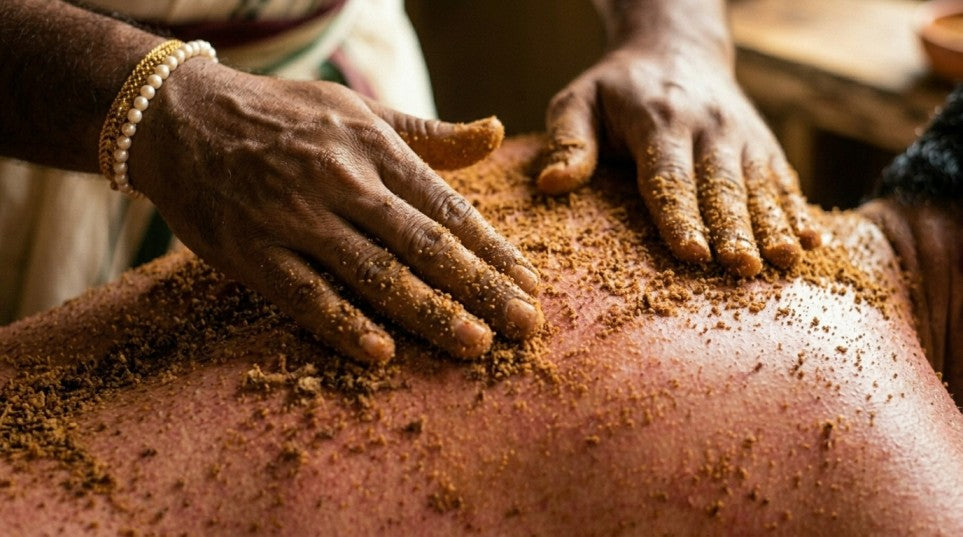
Abhyanga (medicated oil massage)
-
Svedana (herbal steam therapy)
-
Gentle joint therapies
Pain and stiffness gradually reduce as circulation improves.
Phase 3 – Tissue Strengthening and Rejuvenation
Once inflammation stabilizes, long-term strengthening begins.
This includes:
-
Rasayana herbal support
-
Digestive strengthening
-
Gradual mobility exercises
-
Stress regulation practices
Consistency in this phase determines long-term remission potential.
Internal Herbal Support
Herbal support plays a critical role in controlling inflammation and protecting joint integrity. Ayurvedic formulations are designed to detoxify, balance doshas, and nourish tissues simultaneously.
Commonly prescribed herbs include:
-
Simhanada Guggulu – Classical formulation for Amavata
-
Shallaki (Boswellia serrata) – Supports joint flexibility
-
Guduchi (Tinospora cordifolia) – Enhances immune regulation
-
Ashwagandha (Withania somnifera) – Strengthens muscles and reduces stress
-
Rasna – Traditionally used for joint pain
-
Eranda-based formulations – Help reduce stiffness
These are selected carefully based on individual constitution and stage.
The Role of Diet in Rheumatoid Arthritis
Diet is foundational in managing Amavata because digestive strength determines toxin formation.
An Ama-reducing dietary approach includes:
-
Light, warm meals
-
Easily digestible foods
-
Herbal decoctions
-
Warm water consumption
Foods to avoid include:
-
Heavy dairy products
-
Fermented foods
-
Excess sour items
-
Fried and processed foods
-
Cold beverages
Improving digestion directly reduces inflammatory triggers.
Lifestyle & Autoimmune Stability
Lifestyle correction is essential in autoimmune disorders. Stress, irregular sleep, and overexertion can worsen inflammation.
Key lifestyle principles include:
-
Maintaining consistent sleep cycles
-
Practicing meditation or breathing exercises
-
Engaging in gentle joint movement
-
Avoiding overexertion during flare-ups
-
Undergoing periodic supervised detox
When lifestyle aligns with therapy, long-term stability becomes achievable.
Can Rheumatoid Arthritis Be Cured in Ayurveda?
The possibility of remission depends on early detection and disciplined treatment adherence.
In early stages, where structural damage is minimal, substantial improvement and long-term remission are achievable.
In moderate stages, consistent therapy can significantly reduce inflammation, improve mobility, and slow progression.
In advanced stages, management focuses on:
-
Controlling pain
-
Preserving mobility
-
Slowing further joint damage
-
Enhancing quality of life
Ayurveda does not promise instant cure. It offers a structured pathway toward systemic balance and sustained relief.
Final Thoughts
Rheumatoid arthritis is a systemic inflammatory disorder requiring comprehensive management. From an Ayurvedic perspective, it arises due to toxin accumulation and dosha imbalance rather than isolated joint damage.
By eliminating Ama, restoring digestive strength, pacifying Vata, and strengthening tissues, rheumatoid arthritis treatment in Ayurveda offers a sustainable and holistic approach.
Early intervention, personalized care, and lifestyle discipline form the foundation for long-term joint health.
FAQ's for Rheumatoid Arthritis Treatment
Related post

27
Apr
24
Apr

24
Apr
