 Free & discreet shipping on all prescriptions
 No insurance required


March 17, 2026
Ayurvedic Knee Treatment: Therapies, Diet & Diagnosis
Ayurveda, the ancient system of natural healing, has been practiced for thousands of years in India. Its holistic approach to health focuses on balancing the mind, body, and spirit through natural remedies, diet, lifestyle adjustments, and therapies. In this post, we’ll explore the core principles of Ayurveda and how you can incorporate them into your daily routine for a healthier and more balanced life.
Whether it begins as mild discomfort after prolonged walking, knee pain can significantly reduce quality of life. For some, it may result from injury or overuse. For others, it may arise gradually due to degeneration, inflammation, or long-standing lifestyle imbalance.
Conventional treatment often focuses on painkillers, physiotherapy, or surgical intervention in advanced stages. While these approaches may provide temporary relief, they may not always address the deeper physiological imbalance responsible for recurring symptoms.
Ayurvedic knee treatment takes a fundamentally different approach. Instead of focusing solely on the knee joint, Ayurveda evaluates the entire system, including your digestion, lifestyle, tissue nourishment, dosha balance, and nervous system stability, before designing a treatment plan.
In classical Ayurvedic texts, knee pain is often described under conditions such as Sandhivata or Janusandhigata Vata, both associated with aggravated Vata dosha affecting the knee joint.
The aim of Ayurvedic management is not just pain relief but restoration of balance and long-term joint resilience.
Understanding Knee Pain from a Modern Medical Perspective
The knee joint is one of the most complex and heavily used joints in the body. It supports body weight, enables movement such as walking and climbing, and absorbs mechanical stress throughout the day. Structurally, it consists of bones, cartilage, ligaments, tendons, synovial fluid, and surrounding muscles.
Modern medicine identifies several common causes of knee pain, including:
-
Cartilage degeneration (osteoarthritis)
-
Ligament injuries
-
Meniscal tears
-
Inflammatory arthritis
-
Patellofemoral pain syndrome
-
Overuse or strain
-
Arthritis
Acute knee pain may occur suddenly after trauma, while chronic knee pain typically develops gradually over months or years.
Interestingly, imaging findings such as cartilage thinning or mild degeneration do not always correlate with pain severity. Some individuals with visible degeneration experience minimal discomfort, while others with mild structural changes report significant pain.
This suggests that factors beyond structural damage contribute to symptoms, an area where Ayurveda offers deeper insight.
Knee Pain in Ayurveda: The Concept of Janusandhigata Vata
In Ayurveda, the knee joint is governed primarily by Vata dosha, which controls movement and nerve impulses. When Vata becomes aggravated, dryness, instability, and stiffness develop in joints.
Knee pain is often classified under:
-
Janusandhigata Vata : Vata localized in the knee joint
-
Sandhivata : Degenerative joint disorder
-
Amavata : inflammatory arthritis involving toxins
When Vata accumulates in the knee region, it leads to:
-
Dryness of joint tissues
-
Cracking sounds
-
Pain during movement
-
Reduced lubrication
If digestion is weak and Ama (toxins) accumulate, inflammation and swelling may accompany pain.
Ayurveda also emphasizes the health of Asthi Dhatu (bone tissue) and Majja Dhatu (marrow and nerve tissue). Weak tissue nourishment due to impaired digestion gradually leads to joint vulnerability.
Thus, knee pain is not merely a localized issue but a reflection of systemic imbalance.
Types of Knee Conditions
Ayurvedic management can be adapted for various knee-related conditions, depending on individual diagnosis.
Common conditions include:
-
Osteoarthritis of the knee
-
Rheumatoid arthritis affecting the knee
-
Degenerative meniscus conditions
-
Ligament strain
-
Chronic knee swelling
-
Patellar misalignment
Each condition requires a different therapeutic emphasis. Degenerative cases focus on nourishment and lubrication. Inflammatory cases require detoxification before strengthening.
Personalized diagnosis determines direction.
Stages of Knee Degeneration
Knee pain typically progresses in stages rather than appearing suddenly.
-
Mild Stiffness - At this stage, discomfort appears after prolonged sitting or walking. Movement improves symptoms. This often corresponds to early Vata aggravation.
-
Intermittent Pain - Pain becomes more frequent and may occur during activity. Mild cartilage changes may begin.
-
Reduced Mobility - Stiffness becomes persistent. Swelling may appear. Movement becomes limited.
- Advanced Degeneration - Pain may occur even at rest. Structural damage is significant. Functional limitation increases.
Early intervention significantly improves outcomes and may slow progression.
Diagnosis of Knee Pain in Ayurveda
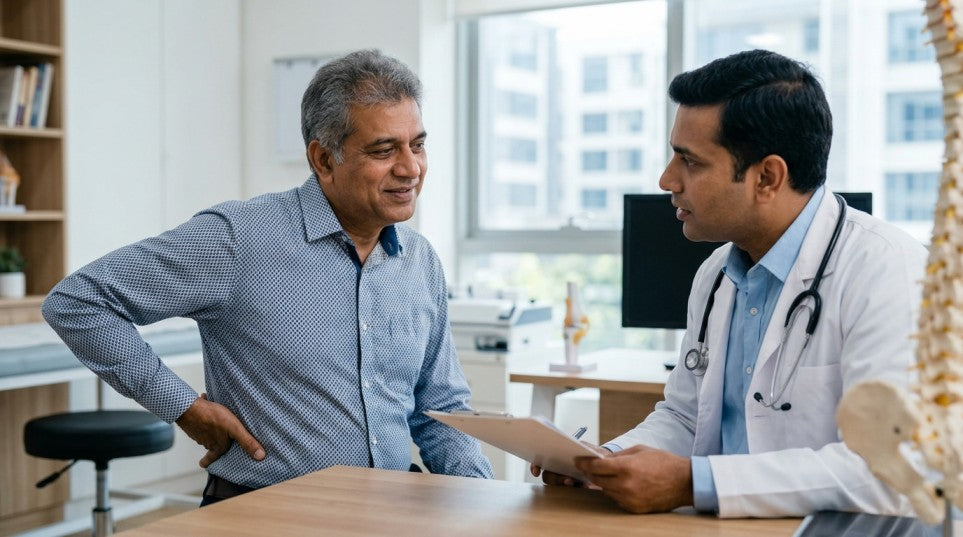
Accurate diagnosis is the foundation of effective Ayurvedic knee treatment. Rather than relying solely on imaging reports, Ayurveda assesses the individual holistically.
The diagnostic process typically includes:
First, Nadi Pariksha (pulse examination) is performed. This classical technique helps understand which doshas are imbalanced and whether toxin accumulation is present. The pulse reveals subtle internal disturbances that may not be evident externally.
Next, detailed screening questions are asked. Existing medical reports such as X-rays or MRIs are also reviewed to understand structural changes.
Senior Ayurvedic doctors then correlate pulse findings, symptom patterns, and report insights to determine:
-
Dominant dosha involvement
-
Stage of tissue depletion
-
Presence or absence of Ama
-
Digestive strength
Based on this comprehensive understanding, a customized treatment plan is created to restore balance, improve tissue nourishment, and reduce recurrence.
This individualized approach distinguishes authentic Ayurvedic knee treatment from generalized remedies.
Ayurvedic Knee Treatment
Management focuses on pacifying aggravated Vata, improving lubrication, nourishing tissues, and reducing inflammation where present. Treatment may include external therapies, internal herbal support, dietary correction, and lifestyle alignment.
The approach is gradual and systematic.
Panchakarma and External Therapies for Knee Pain
External therapies play a vital role in knee care, especially in Vata-dominant conditions.
-
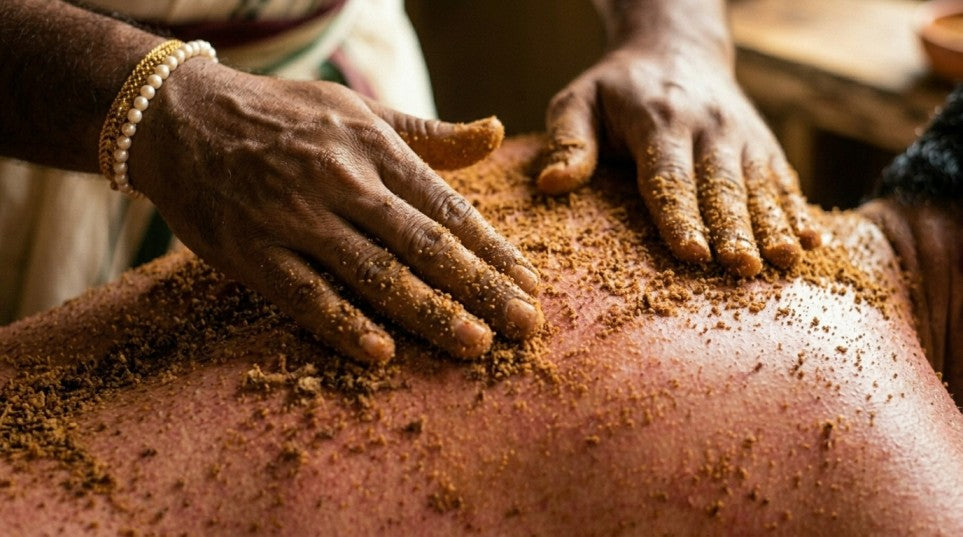
Janu Basti is one of the most recommended treatments. Warm medicated oil is retained over the knee joint for a specific duration. This enhances lubrication and reduces stiffness.
-
Abhyanga (medicated oil massage) improves circulation and calms the nervous system. It helps reduce muscle tightness around the knee.
- Svedana (herbal steam therapy) follows oil application to enhance absorption and relieve stiffness.
In inflammatory cases, detox therapies may be initiated before strengthening treatments.
Each therapy is selected based on individual imbalance.
Internal Herbal Support
Internal herbal support is essential for strengthening joint tissues and stabilizing long-term outcomes. While therapies address local stiffness and discomfort, herbal formulations work at a deeper systemic level.
Ayurveda does not prescribe isolated herbs randomly. Instead, carefully balanced formulations are selected to address dosha imbalance, tissue depletion, and digestive weakness simultaneously. The goal is to nourish joints while improving metabolism and reducing recurrence.
Commonly used herbs include:
-
Shallaki (Boswellia serrata) : Supports joint comfort and flexibility
-
Guggulu (Commiphora mukul) : Used in classical formulations for Vata disorders
-
Ashwagandha (Withania somnifera) : Strengthens muscles and nerves
-
Dashamoola : Balances Vata and reduces musculoskeletal pain
-
Rasna : Traditionally indicated in joint stiffness
-
Nirgundi : Supports joint mobility
-
Asthi shrinkala : improves bone health
These herbs are prescribed in specific combinations tailored to the individual.
The Role of Diet in Managing Knee Pain
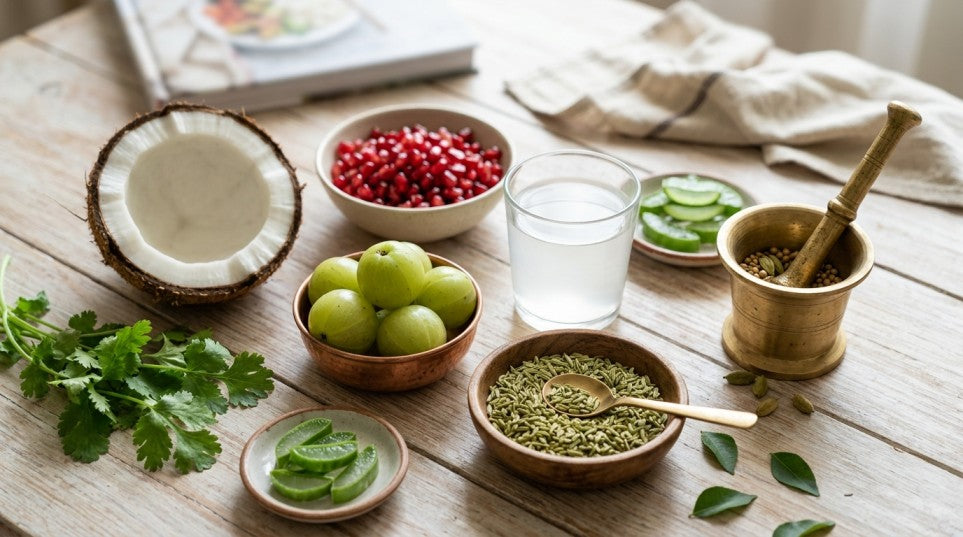
Diet is foundational in Ayurvedic knee treatment because digestion governs tissue nourishment. Weak digestive fire gradually leads to tissue depletion and joint vulnerability.
A Vata-pacifying and anti-inflammatory dietary approach is generally recommended. Warm, freshly prepared meals support digestion and reduce dryness.
Helpful dietary practices include:
-
Consuming warm soups
-
Including moderate healthy fats
-
Maintaining consistent meal timings
-
Staying hydrated with warm water
Foods that may aggravate knee pain include:
-
Cold and refrigerated items
-
Highly processed snacks
-
Excess caffeine
-
Sour and fermented foods in excess
-
Skipping meals
Improving digestion enhances tissue repair and reduces recurrence.
Lifestyle & Posture Correction for Long-Term Knee Health
Lifestyle plays a crucial role in preventing recurrence. Modern sedentary routines place excessive stress on knee joints, especially in individuals with weight imbalance or poor posture.
Incorporating mindful daily habits strengthens treatment outcomes.
Recommended practices include:
-
Avoiding prolonged standing without support
-
Maintaining healthy body weight
-
Practicing supervised yoga for knee strength
-
Performing gentle strengthening exercises
-
Applying warm oil to knees regularly
Avoiding deep squatting and sudden high-impact movements may further reduce strain.
When lifestyle correction aligns with therapy and herbal support, results become more sustainable.
Can Knee Pain Be Permanently Cured in Ayurveda?
The possibility of permanent relief depends on stage and severity.
In early-stage knee pain caused by mild Vata imbalance or muscle strain, complete resolution is often achievable with timely intervention.
In moderate degenerative conditions, consistent Ayurvedic treatment can significantly reduce pain, improve mobility, and prevent rapid progression.
In advanced stages involving significant cartilage loss, the focus shifts to:
-
Reducing pain intensity
-
Improving functional mobility
-
Slowing degeneration
-
Enhancing quality of life
While structural regeneration may be limited in severe cases, disciplined therapy, diet, and lifestyle adherence often reduce reliance on painkillers and delay surgical intervention.
Early diagnosis and consistent management are key determinants of success.
Final Thoughts
Knee pain is not merely a structural problem confined to the joint. From an Ayurvedic perspective, it reflects systemic imbalance involving digestion, tissue nourishment, and dosha disturbance.
By restoring Vata balance, strengthening tissues, improving digestion, and aligning lifestyle habits, ayurvedic knee treatment offers a comprehensive and sustainable approach to joint health.
Early consultation and individualized assessment create the strongest foundation for long-term recovery.
FAQ's on Ayurvedic Knee Treatment
Related post
27
Apr
24
Apr
24
Apr
