 Free & discreet shipping on all prescriptions
 No insurance required


March 19, 2026
PCOS Treatment in Ayurveda: Diagnosis, Therapies and Treatment
Ayurveda, the ancient system of natural healing, has been practiced for thousands of years in India. Its holistic approach to health focuses on balancing the mind, body, and spirit through natural remedies, diet, lifestyle adjustments, and therapies. In this post, we’ll explore the core principles of Ayurveda and how you can incorporate them into your daily routine for a healthier and more balanced life.
Polycystic Ovary Syndrome (PCOS) has become one of the most common hormonal disorders affecting women today. Irregular periods, unexplained weight gain, acne, hair thinning, mood swings, and difficulty conceiving are symptoms that disrupt not just physical health but emotional well-being as well. Many women are diagnosed in their late teens or early twenties and are advised to manage symptoms through hormonal pills, insulin sensitizers, or contraceptives.
While these approaches may regulate cycles temporarily, symptoms often return once medication is discontinued. Over time, metabolic complications such as insulin resistance, thyroid imbalance, and fertility challenges may develop.
PCOS treatment in Ayurveda takes a fundamentally different approach. Rather than treating PCOS as an isolated ovarian disorder, Ayurveda views it as a systemic imbalance involving digestion, metabolism, hormonal signaling, and emotional health. The objective is not simply to induce a menstrual bleed. The objective is to restore natural ovulation, regulate metabolism, and rebalance doshas at the root level.
Understanding PCOS from a Modern Medical Perspective
PCOS is characterized by hormonal imbalance involving excess androgens, irregular ovulation, and polycystic ovarian morphology. The ovaries may develop multiple small follicles that fail to mature and release an egg regularly.
Insulin resistance plays a major role in many cases. Elevated insulin levels stimulate excess androgen production, which disrupts ovulation and contributes to acne, hair growth in unwanted areas, and scalp hair thinning.
Common clinical features include:
-
Irregular or absent menstrual cycles
-
Ovarian cysts on ultrasound
-
Elevated androgen levels
-
Weight gain, particularly around the abdomen
-
Acne and excessive hair growth
Over time, untreated PCOS may increase the risk of type 2 diabetes, infertility, and cardiovascular disease.
However, PCOS is not uniform. Some women have insulin resistance with obesity, while others are lean but experience hormonal imbalance. This variation highlights the need for personalized treatment.
Types of PCOS
PCOS presents in different patterns depending on metabolic and hormonal drivers.
-
Insulin-resistant PCOS is the most common type. Elevated insulin levels stimulate the ovaries to produce excess androgens (testosterone), which disrupt normal follicular development and cause anovulation and cyst formation. Clinically, patients often present with weight gain (especially central obesity), irregular or delayed cycles, acne, and acanthosis nigricans. In the long run, this can lead to type 2 Diabetes.
-
Inflammatory PCOS is driven by chronic systemic inflammation. Inflammatory mediators interfere with ovarian function and increase androgen production, leading to typical PCOS features. Patients may not always be overweight but often show signs like persistent acne, fatigue, bloating, skin issues, and sometimes gut disturbances. Triggers include poor diet, environmental toxins, stress, and gut dysbiosis.
-
Post-pill PCOS occurs after discontinuation of oral contraceptive pills, where the body experiences a temporary hormonal rebound. The pills suppress natural ovulation, and once stopped, the hypothalamic–pituitary–ovarian axis may take time to normalize, resulting in temporary irregular cycles, acne, and mild androgen excess. These women often had normal cycles before starting pills, which is a key distinguishing point. This condition is usually self-limiting and resolves within a few months as natural hormonal rhythms are restored.
Identifying the type helps tailor Ayurvedic intervention.
Stages of PCOS Progression
PCOS often develops gradually rather than suddenly. Recognizing stages allows early intervention.
Stage 1: Menstrual Irregularity
In the initial stage, menstrual cycles may become slightly irregular. A woman who previously had predictable cycles may begin experiencing delays of 35–40 days. Ovulation may still occur intermittently, but hormonal rhythm begins to fluctuate.
From an Ayurvedic standpoint, this stage reflects early disturbance of Vata dosha, particularly Apana Vata, which governs menstrual flow and ovulation. Irregular sleep patterns, emotional stress, excessive travel, or erratic eating habits may trigger this imbalance. Digestive weakness may also begin contributing to subtle Ama formation.
Stage 2: Hormonal Imbalance
As PCOS progresses, hormonal imbalance becomes more evident. Menstrual cycles may become more unpredictable, and ovulation may occur infrequently.
This stage reflects deeper involvement of Kapha accumulation combined with Pitta disturbance. Kapha begins to accumulate in reproductive tissues, contributing to follicular stagnation. Pitta involvement may manifest as inflammatory acne or mood irritability.
Stage 3: Metabolic Involvement
In this stage, metabolic dysfunction becomes more pronounced. Weight gain, particularly around the abdomen, may develop. Laboratory tests may reveal insulin resistance or elevated fasting insulin levels.
Ayurvedically, this stage represents aggravation of Medo Dhatu (fat tissue) and significant Kapha dominance. Ama accumulation may begin blocking reproductive channels (Artavavaha Srotas), interfering with follicular maturation and ovulation.
Stage 4: Fertility Challenges
In advanced or long-standing PCOS, ovulation may cease entirely for extended periods. Fertility challenges may arise due to chronic anovulation.
From an Ayurvedic perspective, this stage indicates deep involvement of Artava Dhatu (reproductive tissue) and persistent obstruction of reproductive channels. Vata becomes further disturbed due to chronic hormonal irregularity, making ovulation restoration more challenging.
PCOS in Ayurveda
In Ayurvedic texts, PCOS is not described by the same name but can be correlated with conditions such as Artava Kshaya and Pushpaghni Jataharini. These conditions involve irregular menstruation, ovulatory dysfunction, and hormonal disturbance.
The underlying pathology often includes Kapha accumulation, Medo Dhatu aggravation (fat tissue imbalance), Ama buildup, and Vata disruption affecting ovulation.
When digestion weakens, metabolic toxins accumulate. These toxins block reproductive channels (Artavavaha Srotas), interfering with normal follicular development.
Vata governs movement, including ovulation. When Vata becomes disturbed due to stress or irregular routine, follicular release may not occur regularly.
Thus, PCOS is viewed as a metabolic-hormonal disorder rooted in digestive imbalance.
Root Causes of PCOS According to Ayurveda
PCOS does not arise from a single cause. It develops gradually through lifestyle, diet, stress, and metabolic disturbance.
Sedentary lifestyle reduces metabolic efficiency. Excess consumption of sweet, processed, and heavy foods increases Kapha and Medo Dhatu. Weak digestion produces Ama, which circulates and disrupts hormonal communication.
Contributing factors include:
-
Sedentary routine
-
Excess refined sugar
-
Irregular meals
-
Chronic stress
-
Sleep disruption
-
History of hormonal contraceptive use
Over time, these factors impair ovulatory rhythm.
Symptoms of PCOS
Symptoms vary by stage and individual constitution. Irregular periods are often the earliest sign. Some women experience cycles longer than 35 days. Others may skip menstruation entirely.
Acne may appear along the jawline. Scalp hair thinning and facial hair growth may occur due to androgen imbalance. Weight gain, particularly around the abdomen, may develop.
Mood swings, fatigue, and sugar cravings are common in insulin-resistant cases.
Unlike isolated menstrual irregularity, PCOS involves multi-system disruption.
Diagnosis of PCOS in Ayurveda
Diagnosis in Ayurveda is individualized. The assessment begins with Nadi Pariksha to evaluate dosha dominance and metabolic imbalance.
Menstrual history is reviewed carefully. Cycle length, flow pattern, pain level, and ovulation timing are discussed in detail. Digestive health, sleep quality, emotional stress, and weight fluctuations are assessed.
Ultrasound reports and hormone panels may be reviewed to correlate structural and biochemical findings.
Doctors determine:
-
Kapha vs Vata dominance
-
Presence of Ama
-
Degree of Medo Dhatu aggravation
-
Strength of Agni
-
Stage of hormonal imbalance
This comprehensive evaluation guides therapy selection.
PCOS Treatment in Ayurveda
Ayurvedic management follows a structured, phased approach rather than immediate hormonal manipulation.
Phase 1: Detoxification
In many cases, detoxification is necessary to remove Ama and reduce Kapha accumulation. Virechana is often recommended to eliminate excess Pitta and metabolic toxins.
Gut Reset Therapy helps restore digestive intelligence. When digestion improves, insulin sensitivity often improves as well.
Panchakarma therapies may be included based on severity.
Phase 2: Metabolic Correction
Once toxins are reduced, treatment focuses on correcting Medo Dhatu imbalance. Structured dietary changes and metabolic stimulation help regulate insulin.
Weight Management Therapy may be recommended in Kapha-dominant PCOS.
Phase 3: Hormonal Stabilization
After metabolic correction, focus shifts toward restoring ovulation and menstrual rhythm. Herbs supporting reproductive balance are introduced.
Stress reduction and Vata stabilization become central.
Internal Herbal Support in PCOS Treatment in Ayurveda
In Ayurveda, herbs are selected based on the specific pathological drivers present in each individual, whether the dominance lies in Kapha accumulation, Medo Dhatu aggravation, Vata disturbance affecting ovulation, or Pitta-driven inflammation.
In insulin-resistant or Kapha-dominant PCOS, herbs that improve metabolism and reduce fat tissue congestion are prioritized. In stress-driven PCOS, adaptogenic and Vata-stabilizing herbs become more important. In inflammatory or acne-dominant PCOS, Pitta-pacifying herbs are emphasized.
Commonly used herbs include:
-
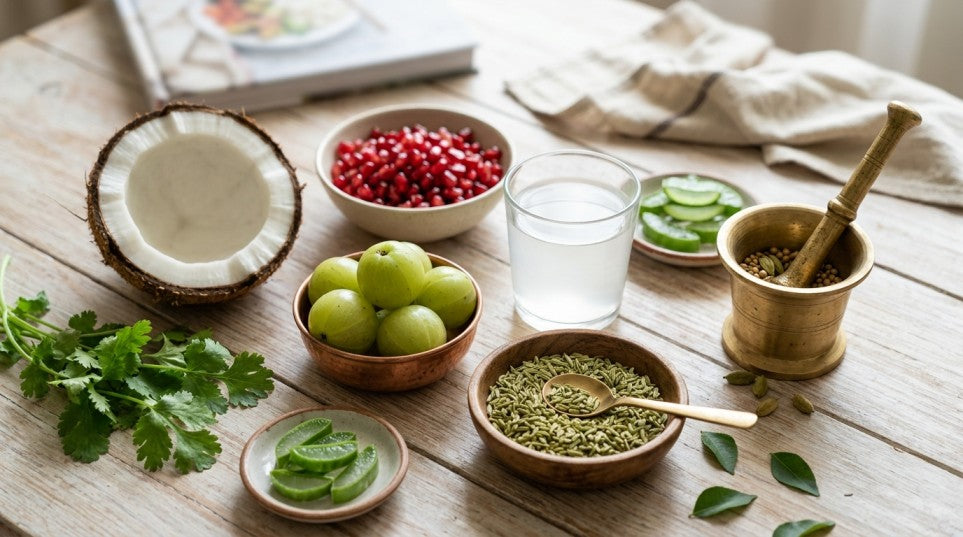
Shatavari: Nourishes reproductive tissues (Artava Dhatu) and supports ovulatory rhythm. Particularly beneficial once detox is completed, and when cycles are regular- aids in fertility
-
Ashwagandha: Stabilizes cortisol levels and supports adrenal balance, making it useful in stress-related PCOS.
-
Ashoka: Regulates menstrual cycle, Improves uterine function, Reduces excessive bleeding
-
Guduchi: Reduces systemic inflammation and improves immune regulation.
-
Triphala: Enhances digestion, supports detoxification, and regulates bowel function.
-
Guggulu formulations: Support fat metabolism and Medo Dhatu correction.
-
Lodhra: Traditionally used for menstrual irregularities and excessive Kapha in the reproductive system.
-
Aloevera: helps reduce blood glucose levels, enhances insulin sensitivity, and helps normalize ovarian hormone production.
Herbal treatment is typically continued for several months, as hormonal recalibration requires time. Unlike synthetic hormones, Ayurvedic herbs work gradually by restoring the body’s intrinsic regulatory mechanisms.
Diet for PCOS
Diet is central to PCOS correction. In Ayurveda, food is considered one of the most powerful medicines, especially in metabolic disorders. PCOS is frequently associated with Kapha accumulation and Medo Dhatu imbalance, both of which are directly influenced by dietary patterns.
The objective of dietary correction in PCOS is to:
-
Strengthen Agni
-
Reduce Kapha
-
Improve insulin sensitivity
-
Stabilize hormonal fluctuations
-
Prevent Ama accumulation
Warm, freshly prepared meals are strongly encouraged. Cold, refrigerated, or processed foods are minimized. Refined sugars and excessive dairy are often restricted, especially in Kapha-dominant presentations.
Low-glycemic foods help regulate insulin response. However, Ayurveda does not focus solely on calorie counting. It emphasizes digestibility, timing, and compatibility of foods.
Overeating weakens Agni. Skipping meals destabilizes Vata and increases cortisol. Both patterns worsen PCOS. Many patients observe that once bloating reduces and bowel regularity improves, cycle predictability also improves. This reflects the gut-hormone axis at work.
Lifestyle & Stress Management in PCOS
In Ayurveda, chronic stress aggravates Vata, which governs movement and hormonal signaling. When Vata becomes erratic, ovulation may not occur consistently.
Lifestyle correction focuses on stabilizing daily rhythms. Irregular sleep patterns, late nights, and erratic work schedules disturb hormonal regulation. Establishing a consistent sleep-wake cycle helps recalibrate endocrine function.
Moderate exercise plays a crucial role. Sedentary lifestyle worsens Kapha accumulation and insulin resistance. However, excessive high-intensity exercise may aggravate Vata and further disrupt cycles. A balanced approach is essential.
Recommended lifestyle practices include:
-
Early bedtime
-
Moderate daily physical activity
-
Structured meal timing
-
Limited screen exposure before sleep
-
Stress-reducing practices such as pranayama or meditation
-
Yogasanas: Surya namaskara, baddha konasana, malasana, bhujangasana
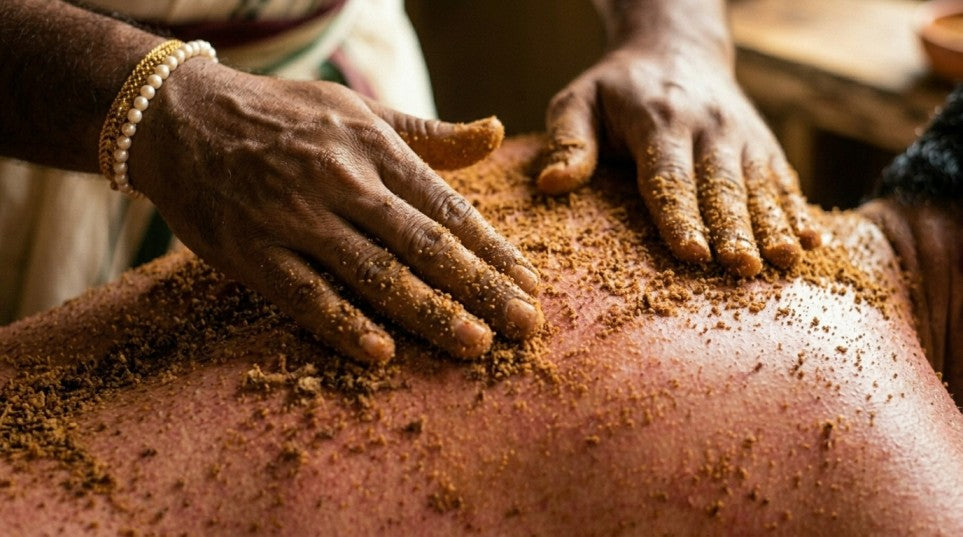
Abhyanga (self-oil massage) may be recommended in Vata-dominant PCOS to calm the nervous system.
Consistency is more important than intensity. Hormonal rhythm responds to regularity.
PCOS and Fertility
PCOS is one of the leading causes of anovulatory infertility. However, infertility in PCOS is not inevitable. When ovulation is restored, conception becomes possible naturally in many cases.
In Ayurveda, fertility depends on the health of Artava Dhatu (reproductive tissue), balanced doshas, and unobstructed reproductive channels (Artavavaha Srotas). When Kapha and Ama block these channels, follicular maturation is impaired. The first objective in fertility-focused PCOS treatment is restoring ovulation. This requires metabolic correction, detoxification if necessary, and Vata stabilization.
Once cycles become more predictable, ovulatory timing improves. Herbal support may be introduced to nourish reproductive tissues and strengthen uterine health.
When digestion strengthens, insulin stabilizes, and ovulation resumes naturally, fertility potential improves significantly. Ayurveda does not force ovulation artificially. It aims to create the internal environment in which ovulation occurs spontaneously.
Fertility restoration is therefore not separate from PCOS correction, it is the natural outcome of systemic balance.
Can PCOS Be Permanently Cured in Ayurveda?
The possibility of permanent correction depends on stage and discipline. In early-stage PCOS, metabolic and hormonal balance can often be restored completely.
In moderate cases, symptoms can be controlled effectively with sustained treatment and lifestyle alignment.
Long-standing PCOS may require extended maintenance, but recurrence risk decreases significantly when digestive strength, metabolic balance, and stress regulation are stabilized.
Ayurveda does not promise overnight cure. It offers structured correction.
When digestion strengthens, Ama clears, Kapha reduces, and Vata stabilizes, menstrual rhythm often normalizes naturally.
Related post
27
Apr
24
Apr

24
Apr
