 Free & discreet shipping on all prescriptions
 No insurance required


March 18, 2026
Ayurveda Treatment for Eczema
Ayurveda, the ancient system of natural healing, has been practiced for thousands of years in India. Its holistic approach to health focuses on balancing the mind, body, and spirit through natural remedies, diet, lifestyle adjustments, and therapies. In this post, we’ll explore the core principles of Ayurveda and how you can incorporate them into your daily routine for a healthier and more balanced life.
Eczema is more than a surface-level skin condition. For many individuals, it becomes a recurring cycle of itching, redness, dryness, oozing, temporary relief, and frustrating flare-ups. Steroid creams may calm inflammation temporarily, but symptoms often return once medication is discontinued. Over time, the skin may become thinner, more sensitive, and increasingly reactive.
In modern life, eczema is one of the most common chronic inflammatory skin disorders affecting both children and adults. Environmental triggers, stress, dietary imbalances, and immune dysregulation all contribute to its persistence.
Ayurveda treatment for eczema approaches the condition differently. Instead of focusing solely on visible symptoms, Ayurveda evaluates the internal imbalance driving the flare-ups. In classical texts, eczema falls under the broader category of Kushta (skin disorders), often associated with aggravated Pitta dosha, vitiation of Rakta Dhatu (blood tissue), accumulation of Ama (toxins), and Kapha involvement.
Understanding Eczema from a Modern Medical Perspective
Eczema (particularly atopic dermatitis) is considered a chronic inflammatory condition involving immune dysfunction and impaired skin barrier integrity. The skin loses its ability to retain moisture effectively, leading to dryness and increased vulnerability to irritants.
Inflammation results from immune overactivation. Triggers may include allergens, stress, certain foods, detergents, pollution, or weather changes. In many individuals, eczema follows a flare-remission pattern. Symptoms intensify under stress or environmental change and then subside temporarily.
Common symptoms include persistent itching, redness, dry patches, thickened skin, and in some cases, fluid-filled lesions. Chronic scratching may lead to skin thickening and pigmentation changes.
However, modern treatment primarily focuses on topical steroids, moisturizers, antihistamines, and immunosuppressive therapies. While these may reduce inflammation, they do not always correct the underlying immune and digestive imbalance contributing to recurrence.
Ayurveda extends the understanding further by linking eczema to gut health, toxin accumulation, and systemic dosha imbalance.
Stages of Eczema Progression
Eczema develops progressively. Early intervention significantly improves outcomes.
Stage 1: Dryness and Itching
In early stages, the skin appears dry with intermittent itching. Redness may be mild. From an Ayurvedic perspective, this reflects early Pitta irritation combined with Vata-induced dryness and itching due to kapha
Stage 2: Redness and Inflammation
Inflammation becomes more visible. Skin may feel warm and irritated. Burning sensation may accompany itching. This stage indicates stronger Pitta ,kapha involvement and Rakta Dushti (vitiation of blood tissue).
Stage 3: Oozing and Crusting
In moderate cases, lesions may ooze fluid or form crusts due to Kapha involvement. Ama accumulation often contributes to this stage.
Stage 4: Chronic Thickening (Lichenification)
Repeated scratching causes skin thickening and darkening. Chronic inflammation becomes entrenched. At this stage, deeper detoxification and systemic correction are required.
Understanding the stage helps determine intensity of Ayurvedic intervention.
Eczema vs Psoriasis
| Feature | Eczema | Psoriasis |
|---|---|---|
| Itching | Intense | Moderate |
| Lesions | Red, inflamed | Thick, whitish scales |
| Oozing | Common | Rare |
| Cause | Immune + barrier dysfunction | Autoimmune |
Proper differentiation ensures correct management.
Eczema in Ayurveda
Ayurveda classifies eczema under Twak Vikara, often linked to Pitta imbalance and Rakta Dushti. When digestive fire weakens, toxins accumulate in the bloodstream. These toxins combine with aggravated Pitta and circulate through the body, eventually manifesting in the skin.
The skin is considered an external reflection of internal health. If digestion is impaired and Ama accumulates, inflammatory reactions may occur in peripheral tissues, including the skin.
Pitta governs heat and transformation. When aggravated, it produces burning sensation, redness, and inflammation. Kapha may contribute to oozing and swelling. Vata may contribute to dryness and cracking.
Thus, eczema is rarely a purely skin-based condition. It is often a manifestation of systemic imbalance involving digestion, immunity, and stress regulation.
Root Causes of Eczema According to Ayurveda
Eczema rarely develops without underlying triggers. Ayurveda identifies several contributing factors that gradually disturb dosha balance.
Weak digestion is one of the primary contributors. When food is improperly digested, Ama accumulates. This toxic residue circulates and affects skin tissues.
Excess consumption of spicy, sour, fermented, and processed foods aggravates Pitta. Dairy products may increase Kapha in susceptible individuals. Emotional stress further aggravates Pitta and Vata, intensifying inflammation.
Common contributing factors include:
-
Irregular eating habits
-
Excess spicy or fried food
-
Dairy sensitivity
-
Chronic stress
-
Chemical exposure
-
Poor sleep
-
Weak digestion
-
Dry skin
Over time, these factors disturb Rakta Dhatu and increase inflammatory tendencies.
Diagnosis of Eczema in Ayurveda
Diagnosis in Ayurveda involves more than visual inspection. The assessment begins with Nadi Pariksha to identify Pitta dominance, Rakta vitiation, and presence of Ama.
The physician evaluates the type of lesions, whether dry, oozing, inflamed, or thickened. Itching intensity and flare patterns are discussed in detail. Dietary habits, stress levels, sleep quality, and digestive symptoms are explored.
Blood reports or allergy testing may be reviewed when necessary. However, emphasis remains on systemic imbalance.
Doctors assess:
-
Severity of Pitta aggravation
-
Degree of Rakta involvement
-
Presence of Ama
-
Digestive strength
-
Emotional stress triggers
This holistic diagnosis ensures individualized therapy planning.
Ayurveda Treatment for Eczema
Ayurvedic management of eczema follows a layered approach.
Detoxification Phase
In moderate to chronic eczema, detoxification becomes essential. Virechana, a therapeutic purgation procedure, is often recommended to eliminate excess Pitta and ama from the system. Since Pitta primarily resides in the digestive tract and bloodstream, removing aggravated Pitta reduces systemic inflammation.
Detoxification reduces inflammatory load and prepares the body for sustained healing.
Gut Correction
Since digestion plays a central role in eczema, correcting Agni is critical. Gut Reset protocols help eliminate Ama and restore digestive strength. Once digestion stabilizes, toxin formation reduces significantly.
External Therapies
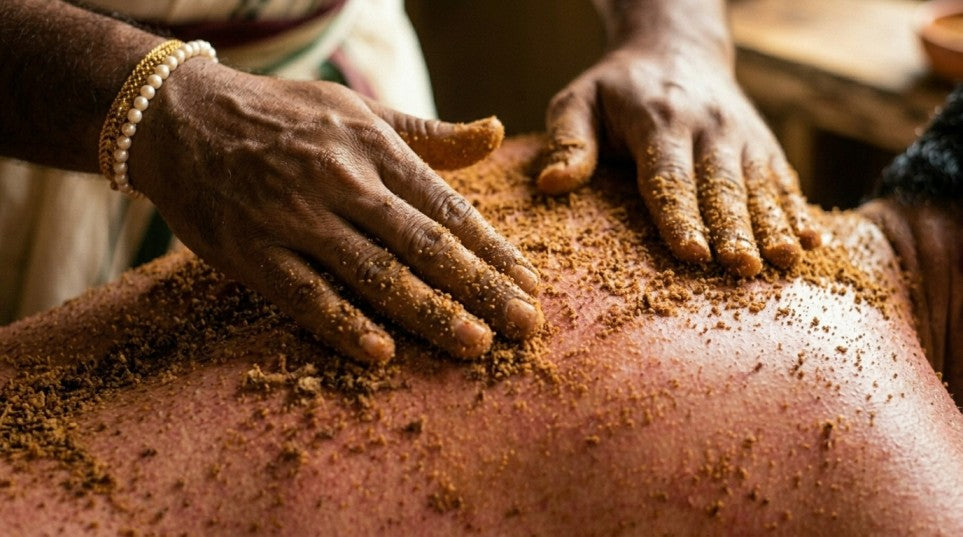
Medicated oil applications and herbal pastes help soothe inflammation and reduce itching. In Vata-dominant dryness, Abhyanga may be recommended to improve systemic balance.
Treatment is always customized based on stage and constitution.
Internal Herbal Support
Herbs in Ayurveda are not prescribed randomly for symptom relief. They are selected based on whether the eczema is primarily inflammatory (Pitta-dominant), oozing and itchy(Kapha involvement), or dry and cracked (Vata involvement). Additionally, digestive strength is assessed before beginning herbal therapy, as poor digestion can reduce the effectiveness of even the most potent formulations.
In inflammatory eczema with burning and redness, herbs that cool and purify Rakta are prioritized. In chronic or recurrent eczema, deeper detoxifying herbs may be used alongside digestive correctives to prevent toxin formation.
Commonly used herbs include:
-
Neem (Azadirachta indica): Traditionally known for its blood-purifying and antimicrobial properties. It helps reduce inflammation and itching in Pitta-dominant eczema.
-
Manjistha (Rubia cordifolia): A classical Rakta-shodhana (blood purifier) herb that supports detoxification and improves skin clarity over time.
-
Guduchi (Tinospora cordifolia): Reduces systemic inflammation and strengthens immune regulation. Particularly helpful in chronic, immune-mediated eczema.
-
Khadira (Acacia catechu): Used in skin disorders to reduce itching and assist in detoxification.
-
Yashtimadhu (Licorice): Soothes irritated tissues and supports healing of inflamed skin and mucosa.
The duration of herbal treatment varies depending on chronicity. Acute eczema may respond within weeks, while long-standing eczema may require sustained therapy for several months.
Unlike steroid creams that suppress surface inflammation, Ayurvedic herbs aim to recalibrate the internal inflammatory response.
Diet for Eczema
Ayurveda diet is one of the most powerful and often overlooked contributors to eczema flare-ups. Ayurveda emphasizes that skin health is directly dependent on digestive health. When digestion is weak or irregular, toxins accumulate in the bloodstream and manifest in peripheral tissues, including the skin.
Foods that increase internal heat, such as excessive chili, fermented items, deep-fried foods, and alcohol, aggravate Pitta and worsen inflammation. Similarly, heavy and incompatible food combinations weaken digestion and contribute to toxin buildup.
For many patients, dairy, particularly curd and processed cheese, may aggravate symptoms, especially in Kapha-dominant eczema. However, dietary recommendations must be individualized rather than generalized.
A skin-supportive diet typically emphasizes:
-
Warm, freshly prepared meals
-
Mildly spiced food
-
Bitter and leafy vegetables
-
Adequate hydration
-
Seasonal fruits (avoiding overly sour varieties during flare-ups)
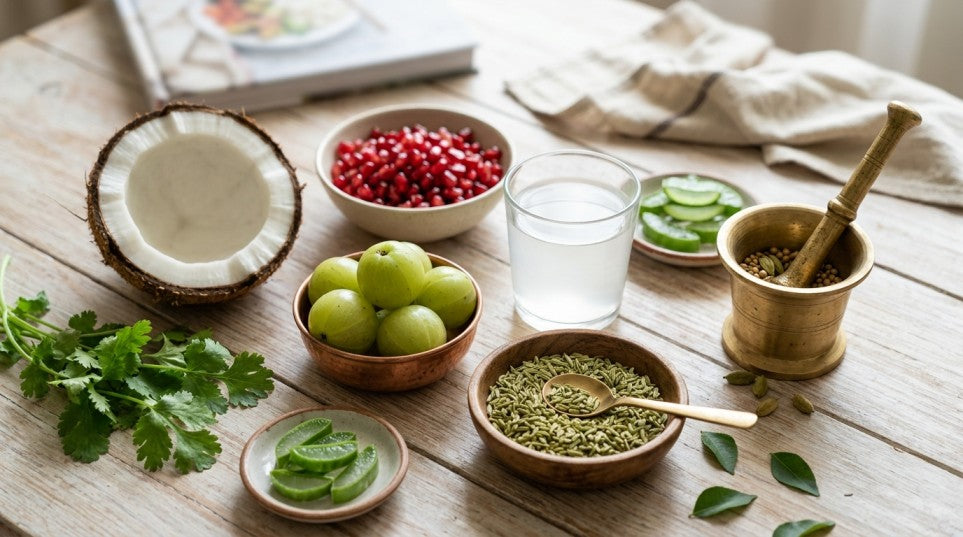
Cooling herbal infusions such as coriander or fennel water may help regulate internal heat. Meals should be consumed at regular times to stabilize digestive fire.
Irregular meal timing, emotional eating, and overeating must also be corrected. Skipping meals weakens Agni, while overeating overwhelms digestion.
Dietary correction is not a short-term restriction. It is a long-term rebalancing process that supports sustained remission.
Stress & Emotional Triggers
Stress significantly impacts eczema. Emotional strain increases inflammatory cytokines and worsens flare-ups.
Breathing practices, meditation, and structured daily routine help stabilize hormonal rhythm and reduce inflammation.
Managing lifestyle and stress reduces recurrence risk.
Can Eczema Be Permanently Cured in Ayurveda?
This is one of the most frequently asked questions by patients suffering from eczema. The answer depends on several factors, including duration of the condition, severity, immune involvement, and adherence to lifestyle correction.
In early or acute eczema, where inflammation is recent and structural skin damage is minimal, Ayurvedic treatment can often bring complete resolution when digestive balance is restored and triggers are eliminated.
In chronic eczema, especially cases persisting for years or those involving steroid dependency, the approach shifts toward long-term remission rather than instant cure. Ayurveda aims to reduce frequency, intensity, and duration of flare-ups while stabilizing immune response.
The true measure of success in Ayurvedic eczema treatment is not just symptom suppression, it is sustained stability without dependency on steroids.
Final Thoughts
Eczema is not merely a skin issue. It reflects internal imbalance, toxin accumulation, and immune dysregulation.
By restoring digestive fire, eliminating Ama, purifying Rakta, and stabilizing Pitta, ayurveda treatment for eczema offers a structured and sustainable pathway toward healthier skin.
Related post
27
Apr
24
Apr

24
Apr
