 Free & discreet shipping on all prescriptions
 No insurance required


March 18, 2026
Ayurvedic Treatment for Cervical Spondylosis
Ayurveda, the ancient system of natural healing, has been practiced for thousands of years in India. Its holistic approach to health focuses on balancing the mind, body, and spirit through natural remedies, diet, lifestyle adjustments, and therapies. In this post, we’ll explore the core principles of Ayurveda and how you can incorporate them into your daily routine for a healthier and more balanced life.
Long hours at desks, poor posture, emotional stress, and sedentary routines have dramatically increased the incidence of chronic neck pain. What begins as mild stiffness after a long workday often progresses into persistent discomfort, radiating arm pain, tingling sensations, and reduced mobility.
Many individuals initially dismiss the symptoms as temporary strain. However, cervical spondylosis is not merely muscle fatigue. It involves gradual degeneration of the cervical spine, particularly the discs, joints, and surrounding soft tissues. When this degeneration advances, nerve roots may become irritated, resulting in neurological symptoms.
Ayurvedic treatment for cervical spondylosis approaches this condition through the lens of systemic balance. In Ayurveda, degeneration of the cervical spine correlates primarily with aggravated Vata dosha, depletion of Asthi Dhatu (bone tissue), and involvement of Majja Dhatu (nerve tissue). Rather than focusing only on pain suppression, Ayurveda aims to lubricate, nourish, stabilize, and slow degeneration while restoring mobility.
Understanding Cervical Spondylosis from a Modern Medical Perspective
The cervical spine consists of seven vertebrae separated by intervertebral discs that act as cushions. These discs provide flexibility and absorb mechanical stress. Over time, age-related changes or lifestyle strain cause disc dehydration. As discs lose water content, they become thinner and less flexible.
This reduction in disc height increases stress on surrounding joints and ligaments. In some cases, disc bulges or protrusions develop, narrowing the space through which nerves exit the spine.
Symptoms may develop gradually. Individuals often first notice stiffness when turning the head. Later, pain may radiate into the shoulders or arms. In more advanced cases, tingling or numbness in the fingers may appear due to nerve compression.
Common symptoms include:
-
Persistent neck stiffness
-
Pain radiating to shoulders or arms
-
Occipital headaches beginning at the base of the skull
-
Tingling or numbness in fingers
-
Reduced range of neck motion
Cervical spondylosis is typically progressive. However, its progression rate varies widely depending on posture, lifestyle, muscular support, and systemic health.
Ayurveda expands this understanding by explaining why degeneration accelerates in some individuals more than others.
Cervical Spondylosis vs Slip Disc vs Frozen Shoulder
| Feature | Cervical Spondylosis | Slip Disc | Frozen Shoulder |
|---|---|---|---|
| Onset | Gradual | Often sudden | Gradual |
| Pain Origin | Neck | Disc protrusion | Shoulder joint |
| Nerve Symptoms | Common | Common | Rare |
| Mobility Restriction | Neck | Neck | Shoulder |
Proper diagnosis ensures effective therapy.
Stages of Cervical Degeneration
Cervical spondylosis develops gradually through identifiable stages. Understanding these stages helps determine the intensity and structure of treatment.
Stage 1: Disc Dehydration
In the earliest stage, discs begin losing water content. Symptoms may be minimal, limited to occasional stiffness or discomfort after prolonged work.
From an Ayurvedic standpoint, this stage reflects early Vata aggravation. Dryness, one of Vata’s primary qualities, begins affecting spinal structures.
Stage 2: Disc Bulge and Joint Stress
As degeneration progresses, disc thinning increases stress on surrounding joints. Minor bulging may develop. Pain becomes more frequent.
Ayurvedically, Vata begins localizing in the cervical joints (Sandhi), leading to instability and mild inflammation.
Stage 3: Nerve Irritation
In this stage, disc bulge or bone spur formation may narrow nerve spaces. Radiating pain, tingling, or numbness may appear.
This reflects involvement of Majja Dhatu, indicating that degeneration is now affecting nerve tissue.
Stage 4: Chronic Compression
Advanced degeneration may result in persistent pain and reduced mobility. Muscle weakness may develop in severe cases.
This stage represents deep Vata dominance with structural depletion of Asthi and Majja tissues.
Early intervention offers better outcomes.
Cervical Spondylosis in Ayurveda
In Ayurveda, cervical spondylosis aligns closely with Sandhivata, a Vata-dominant joint disorder. Vata governs movement, dryness, and degeneration. When Vata becomes aggravated due to aging, stress, irregular routines, or poor diet, it begins affecting vulnerable tissues.
The cervical spine is particularly sensitive because it supports head movement and experiences repetitive strain. When Vata accumulates in this region, it produces stiffness, cracking sounds, restricted mobility, and pain.
Asthi Dhatu (bone tissue) and Majja Dhatu (nerve tissue) play central roles in spinal integrity. When digestive fire weakens, nourishment to these tissues reduces. Over time, structural depletion accelerates degeneration.
Unlike inflammatory arthritis, cervical spondylosis is primarily degenerative. However, secondary inflammation may occur when nerve irritation develops.
Therefore, Ayurvedic treatment must:
-
Pacify aggravated Vata
-
Nourish Asthi Dhatu
-
Protect Majja Dhatu
-
Improve lubrication
-
Reduce muscular spasm
Root Causes of Cervical Spondylosis According to Ayurveda
Cervical spondylosis rarely develops due to a single event. It results from cumulative strain and imbalance.
Modern lifestyle has intensified Vata-provoking behaviors. Prolonged screen use, poor ergonomic alignment, and static posture increase mechanical stress on the cervical spine. Emotional stress further aggravates Vata, increasing muscular tension.
Common contributing factors include:
-
Long hours at a desk
-
Forward head posture
-
Dry, irregular eating habits
-
Inadequate hydration
-
Chronic stress
-
Irregular sleep
-
Previous neck injury
Over time, these habits create structural vulnerability.
Symptoms of Cervical Spondylosis
Symptoms vary depending on stage and severity. Early-stage cervical spondylosis may present as mild stiffness upon waking. As degeneration progresses, discomfort may become persistent.
Patients often report difficulty turning their head while driving or working. Headaches originating from the base of the skull are common due to muscular tension.
Symptoms may include:
-
Neck stiffness
-
Radiating arm pain
-
Tingling in fingers
-
Shoulder tightness
-
Headaches
-
Reduced neck mobility
Unlike frozen shoulder, cervical spondylosis pain typically originates in the neck before radiating outward. Unlike a slip disc, symptoms may develop gradually rather than suddenly.
Proper differentiation ensures appropriate treatment.
Diagnosis of Cervical Spondylosis in Ayurveda
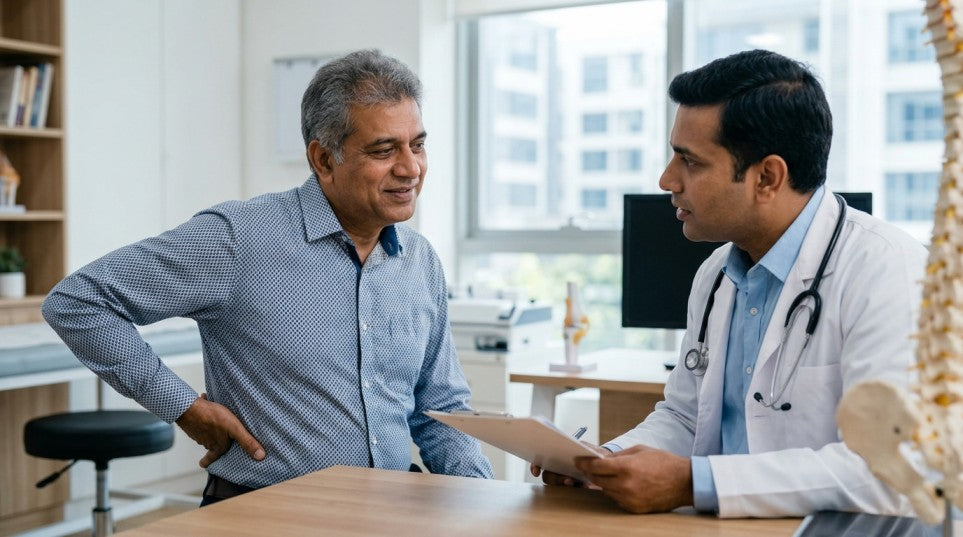
Diagnosis begins with Nadi Pariksha (pulse examination). Through subtle pulse assessment, the physician evaluates Vata dominance, systemic dryness, inflammatory tendencies, and underlying tissue depletion. This provides insight beyond structural imaging and helps identify whether degeneration is primarily Vata-driven, stress-aggravated, or accompanied by secondary inflammation.
The doctor will carefully evaluate the patient's posture, neck curvature, and muscular symmetry. Restricted range of motion, muscle guarding, and localized tenderness are examined manually. Special attention is given to signs of nerve involvement, such as radiating pain, numbness, tingling, or weakness in the upper limbs.
Medical reports such as X-rays or MRI scans are reviewed to assess:
-
Disc bulge
-
Osteophyte (bone spur) formation
-
Nerve compression
-
Cervical curvature changes
However, Ayurveda does not rely solely on imaging. The physician also explores lifestyle factors, sleep quality, emotional stress, work posture, digestive health, and dietary habits. Since degeneration accelerates when Vata is aggravated systemically, understanding daily routines becomes essential.
This individualized evaluation ensures that treatment addresses the root cause rather than simply managing symptoms.
Ayurvedic Treatment for Cervical Spondylosis
Treatment focuses on pacifying Vata, restoring lubrication, improving circulation, and strengthening spinal tissues.
Greeva Basti
Greeva Basti is one of the most effective therapies for cervical spondylosis. In this procedure, warm medicated oil is retained over the cervical region for a specific duration. The oil penetrates deeply, providing lubrication and reducing stiffness.
Greeva Basti improves circulation, reduces muscular tension, and nourishes spinal tissues.
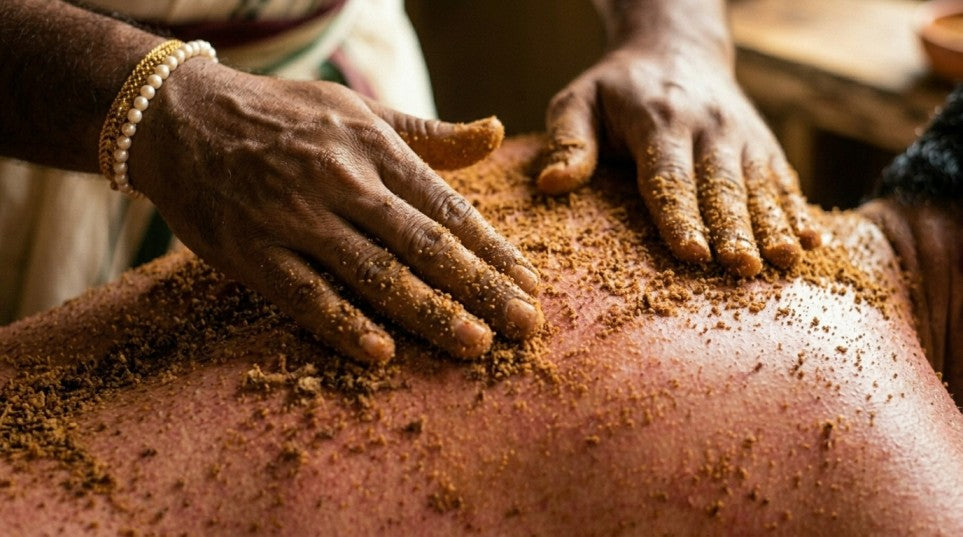
Abhyanga
Abhyanga is a full-body medicated oil massage reduces systemic Vata and relaxes muscular tension. It improves circulation and supports tissue nourishment.
Kati Basti
If degeneration extends beyond the cervical region, Kati Basti may be incorporated to support spinal alignment and lower back stability.
Internal Herbal Support
Degenerative conditions are strongly linked with Vata imbalance. Vata’s qualities like dryness, roughness, lightness, and mobility, gradually deplete structural tissues when aggravated. Therefore, ayurvedic herbal treatment must not only reduce inflammation but also provide nourishment and stabilization.
Commonly used herbs include:
-
Ashwagandha: Strengthens musculoskeletal tissue and supports nerve stability
-
Dashamoola: Classical formulation that reduces Vata and inflammation
-
Shallaki: Supports joint comfort and reduces degenerative pain
-
Yogaraj Guggulu: Traditionally used in Vata-related joint disorders
-
Rasna: Helpful in musculoskeletal stiffness
Long-term herbal support helps maintain lubrication and prevent rapid progression of degeneration.
Role of Diet in Cervical Spondylosis
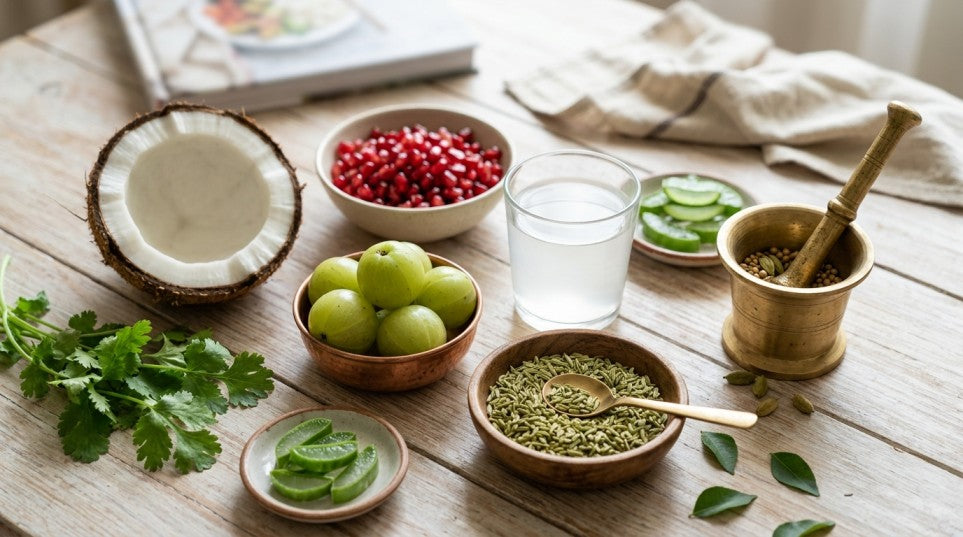
Since cervical spondylosis is primarily Vata-dominant, the ayurvedic diet must focus on reducing dryness and improving lubrication. Dry, cold, and processed foods increase Vata and contribute to tissue depletion over time.
Warm, freshly prepared meals are strongly recommended. Adequate intake of healthy fats such as ghee helps counteract dryness and supports joint lubrication. Proper hydration is also essential for disc health, as dehydration worsens disc thinning.
Dietary principles generally include:
-
Warm, cooked foods
-
Moderate use of ghee
-
Soups
-
Adequate hydration
-
Avoidance of dry snacks
Irregular meal timing should be corrected. Eating at consistent intervals stabilizes digestion and improves tissue nourishment.
Excess caffeine, overly spicy foods, and fasting can aggravate Vata and should be minimized in individuals with cervical degeneration.
When diet aligns with therapy, recovery becomes more sustainable.
Lifestyle & Posture Correction
Here are some ayurvedic lifestyle choices that can help with recovery -
- Postural correction is essential in cervical spondylosis management. Ergonomic adjustments reduce mechanical stress on discs.
- Maintaining screen at eye level, avoiding prolonged downward neck flexion, and incorporating neck mobility exercises prevent further strain.
- Stress management also plays a critical role, as chronic tension increases muscular tightness.
Can Cervical Spondylosis Be Permanently Cured in Ayurveda?
The possibility of permanent cure depends largely on the stage of degeneration. In early stages, where disc dehydration is mild and structural damage is limited, significant reversal of symptoms is possible. With proper therapy, diet correction, and lifestyle alignment, many individuals regain full mobility and remain symptom-free.
In moderate stages, where disc bulging or mild nerve irritation is present, Ayurvedic treatment focuses on slowing progression, reducing pain, and improving function. While structural regeneration may be limited, symptoms can often be controlled effectively.
In advanced cases with significant nerve compression or severe structural damage, the objective shifts toward improving quality of life. Consistent therapy can reduce dependence on painkillers and may delay or prevent surgical intervention in certain cases.
Ayurveda does not promise unrealistic regeneration of severely damaged discs. Instead, it offers a structured pathway toward:
-
Pain reduction
-
Mobility improvement
-
Slowing degeneration
-
Preventing recurrence
-
Enhancing overall spinal stability
Permanent improvement is most achievable when intervention begins early and lifestyle changes are maintained consistently.
The success of treatment ultimately depends on discipline, stage of disease, and individualized care.
Final Thoughts
Cervical spondylosis reflects degeneration driven by aggravated Vata and tissue depletion.
By pacifying Vata, nourishing Asthi and Majja Dhatu, correcting posture, and supporting systemic balance, ayurvedic treatment for cervical spondylosis offers a sustainable path toward neck pain relief and spinal stability.
Related post
27
Apr
24
Apr
24
Apr
