 Free & discreet shipping on all prescriptions
 No insurance required


March 25, 2026
Virechana Treatment for Weight Loss
Ayurveda, the ancient system of natural healing, has been practiced for thousands of years in India. Its holistic approach to health focuses on balancing the mind, body, and spirit through natural remedies, diet, lifestyle adjustments, and therapies. In this post, we’ll explore the core principles of Ayurveda and how you can incorporate them into your daily routine for a healthier and more balanced life.
Virechana is not a simple laxative cleanse or a quick purgation technique for temporary weight reduction. It is a structured therapeutic detox procedure designed to correct deep metabolic imbalance.
In Ayurveda, weight gain is rarely viewed as an isolated problem. It is usually associated with weakened digestive fire (Agni), accumulation of toxins (Ama), imbalance of Kapha and Pitta doshas, and dysfunction in Medo Dhatu (fat tissue metabolism). When these imbalances persist, fat accumulation becomes difficult to reverse through weight loss diet alone.
Virechana works by targeting these root causes.
Rather than suppressing appetite or forcing water loss, Virechana supports liver detoxification, improves bile secretion, reduces systemic inflammation, and enhances metabolic intelligence. When performed under proper medical supervision, it becomes a powerful metabolic reset therapy.
What Is Virechana in Ayurveda?
Virechana is one of the five primary procedures of Panchakarma. It is a controlled therapeutic purgation designed to eliminate excess Pitta and Kapha from the body, particularly from the digestive tract and liver.
The word “Virechana” refers to the process of expelling accumulated toxins through the lower gastrointestinal tract using specially prepared herbal formulations. Unlike over-the-counter laxatives, Virechana is carefully prepared through a structured sequence that includes internal oiling, external therapies, and supervised detox administration.
In weight management, Virechana is especially relevant because the liver plays a central role in fat metabolism and hormonal regulation. When liver function becomes sluggish due to toxin accumulation, bile secretion reduces and fat digestion becomes inefficient.
Virechana restores digestive clarity and metabolic efficiency.
It is not merely about cleansing the bowel; it is about resetting the liver–gut axis.
Why Virechana Is Effective for Weight Loss
Among Panchakarma procedures, Virechana is particularly useful in individuals with Kapha-Pitta dominance and metabolic congestion.
Obesity often involves a combination of Kapha accumulation and Pitta imbalance. Kapha contributes to heaviness and sluggishness, while aggravated Pitta may reflect liver congestion and inflammatory processes. Together, these disrupt proper fat metabolism.
When bile secretion is impaired, fat digestion becomes inefficient. Insulin resistance may develop. Inflammation increases. Hormonal balance deteriorates.
Virechana stimulates bile flow and supports liver detoxification. By clearing Pitta accumulation, it reduces inflammatory burden. By reducing Kapha stagnation, it enhances metabolic mobility.
From an Ayurvedic perspective, Ama accumulated in Medo Dhatu obstructs tissue channels. Virechana helps eliminate this obstruction, allowing metabolic pathways to function efficiently again.
Patients often report:
-
Reduced heaviness
-
Improved appetite regulation
-
Decreased bloating
-
Enhanced energy
-
Gradual fat reduction
Weight loss becomes a by-product of improved metabolic clarity.
How Much Weight Can Be Lost with Virechana?
Weight reduction following Virechana varies depending on metabolic status and follow-up discipline.
In the initial phase, some weight reduction may reflect fluid balance correction and toxin clearance. Over subsequent weeks, improved digestion and hormonal balance may lead to gradual fat loss.
The meaningful and sustained weight loss from Virechana happens over the following 6–12 weeks, after the therapy is complete. This occurs through a different mechanism: by resetting Pitta dosha and restoring healthy Agni (digestive fire), Virechana corrects the metabolic conditions that caused weight gain in the first place, sluggish metabolism, poor fat processing by the liver, water retention linked to hormonal imbalance, and insulin resistance associated with chronic Ama accumulation.
A published clinical study on Virechana and obesity (PMC, 2020) found statistically significant reductions in body weight, serum triglycerides, and fasting blood glucose following Virechana treatment. It also demonstrated correction of gut flora dysbiosis, which is increasingly understood as a key driver of metabolic obesity.
Virechana is not designed to cause rapid, dramatic weight drops. Instead, it creates the internal conditions necessary for sustainable metabolic correction.
Patients who combine Virechana with structured dietary and lifestyle changes often experience more stable outcomes.
Who Is the Ideal Candidate for Virechana for Weight Loss?
Virechana is most beneficial for individuals with metabolic stagnation rather than simple overeating.
It is often recommended in cases of:
-
Stubborn abdominal fat
-
Fatty liver tendencies
-
PCOS-related weight gain
-
Insulin resistance
-
Chronic acidity combined with obesity
-
Weight plateau despite dieting
Women with PCOS frequently exhibit both hormonal imbalance and digestive stagnation. Virechana helps regulate liver function, which plays a central role in estrogen metabolism. By supporting hepatic detox pathways, it may indirectly improve hormonal rhythm.
Individuals experiencing acid reflux alongside weight gain may also benefit, as both conditions often involve aggravated Pitta.
However, therapy suitability must be determined through proper evaluation.
Post-Virechana Diet for Weight Loss - What to Eat and Avoid
The post-Virechana dietary protocol is called Samsarjana Krama in classical Ayurveda. It is not optional, it is the mechanism through which the metabolic benefits of Virechana are sustained and amplified.
-
Immediately after purgation (Day 1): Warm rice gruel only. No solid food.
-
Days 2–5: Thin khichdi (moong dal and rice), warm soups, coconut water, herbal teas with ginger and cumin. No raw food, no refrigerated food, no dairy except warm milk.
-
Days 6–10: Soft cooked grains, lentil soups, cooked vegetables with ghee and mild spices (turmeric, cumin, coriander). Continue avoiding raw food, cold food, and processed food entirely.
-
Days 11–30 (the weight-loss window): This is when the metabolic reset from Virechana is most active. Continue a Pitta-Kapha pacifying diet — favour warm, light, cooked foods. Avoid sugar, fried food, red meat, alcohol, and cold drinks. Morning warm water with lemon, followed by a small amount of Triphala churna before bed, supports continued metabolic improvement.
-
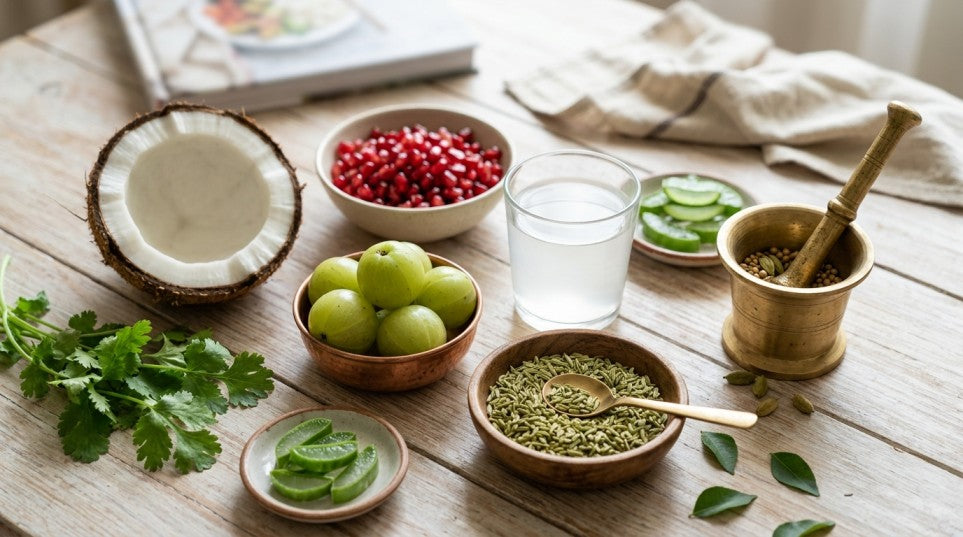
Foods that enhance weight loss after Virechana: Bitter gourd (karela), methi (fenugreek) seeds, ginger, turmeric, coriander, moong dal, warm buttermilk (not cold), amla (Indian gooseberry), and warm water throughout the day.
-
Foods that undo Virechana's benefits: Cold drinks, ice cream, raw salads, refrigerated leftovers, processed snacks, alcohol, and excessive dairy. These re-aggravate Pitta and Kapha and cause rapid Ama re-accumulation.
Herbs Used in Virechana for Weight Loss
The purgative formulation used in Virechana is selected based on the patient's constitution and the severity of Pitta imbalance. The most commonly used purgative herbs at Yuvrit include:
-
Trivrit (Operculina turpethum): The most important classical purgative in Ayurveda. Referenced in Charaka Samhita as the primary herb for Virechana. Specifically targets the small intestine, liver, and bile pathways the exact organs whose dysfunction drives Pitta-related weight gain.
-
Haritaki (Terminalia chebula): One of the three herbs in Triphala. A mild purgative with rejuvenating properties, often used for patients with sensitive constitutions or for elderly patients who cannot tolerate stronger purgatives.
-
Senna (Cassia angustifolia): Used in milder Virechana formulations, particularly for patients with a sluggish bowel tendency (Mridu Koshtha).
-
Castor oil (Eranda Taila): A Vata-pacifying purgative often combined with Trivrit for patients where both Vata and Pitta are involved. Particularly useful in cases where joint-related weight gain co-exists with metabolic imbalance.
-
Tikta Ghrita: The medicated bitter ghee used during the Snehapana preparatory phase. Contains herbs like Neem, Patola, Guduchi, and Vasa, all of which have documented anti-inflammatory and metabolic effects alongside their toxin-mobilising role.
Virechana and Hormonal Weight Gain
Hormonal imbalance plays a central role in many weight-related disorders.
The liver is responsible for metabolizing excess estrogen and regulating insulin sensitivity. When hepatic detox pathways slow, hormonal imbalance may intensify.
Virechana improves liver efficiency and bile secretion. This enhances hormone metabolism and may support conditions such as PCOS.
Stress-related weight gain may also improve indirectly when systemic inflammation reduces and digestive rhythm stabilizes.
Does Virechana Reduce Belly Fat?
Central obesity is frequently associated with insulin resistance and cortisol imbalance.
By improving liver function, reducing Kapha stagnation, and enhancing digestive clarity, Virechana supports reduction of abdominal heaviness.
However, persistent belly fat often requires continued dietary discipline and lifestyle correction following detox.
Virechana initiates metabolic reset. Long-term stability requires consistent follow-up.
Final Thoughts
Searching for virechana treatment for weight loss reflects a desire for deeper metabolic correction rather than superficial dieting.
Virechana is one of Ayurveda’s most powerful therapeutic tools for resetting liver function, clearing toxin accumulation, and improving metabolic efficiency.
When appropriately indicated and professionally supervised, it supports sustainable weight reduction by addressing root causes rather than symptoms.
Related post
27
Apr
24
Apr

24
Apr
