 Free & discreet shipping on all prescriptions
 No insurance required


March 17, 2026
Osteoarthritis Treatment in Ayurveda
Ayurveda, the ancient system of natural healing, has been practiced for thousands of years in India. Its holistic approach to health focuses on balancing the mind, body, and spirit through natural remedies, diet, lifestyle adjustments, and therapies. In this post, we’ll explore the core principles of Ayurveda and how you can incorporate them into your daily routine for a healthier and more balanced life.
Osteoarthritis is a common joint disorder affecting adults across age groups, particularly after the age of forty. It is commonly associated with cartilage degeneration, stiffness, and progressive reduction in mobility. For many individuals, the condition begins subtly, perhaps as mild discomfort while climbing stairs or stiffness after sitting for long hours. Over time, however, it may progress into persistent pain that interferes with routine activities.
Osteoarthritis treatment in Ayurveda offers a distinct and holistic perspective. Ayurveda does not view osteoarthritis as merely mechanical “wear and tear.” Instead, it understands the condition as a manifestation of systemic imbalance, primarily due to aggravated Vata dosha, tissue depletion, and impaired nourishment of joints.
Ayurvedic texts describe osteoarthritis as the condition known as Sandhivata, a Vata-dominant disorder affecting the joints.
Understanding Osteoarthritis from a Modern Medical Perspective
Osteoarthritis develops when the protective cartilage covering the ends of bones gradually deteriorates. Physiologically cartilage allows joints to move smoothly and absorb mechanical shock. As the bones thin, due to underlying pathology or age, it begins to rub against each other, leading to pain, inflammation, and eventually restricted movement.
The condition most commonly affects:
-
Knees
-
Hips
-
Lower back and spine
-
Neck
-
Small joints of the hands
Early symptoms may include stiffness after inactivity, mild discomfort during activity, and reduced flexibility. As the disease progresses, pain may become more frequent and mobility increasingly limited.
While aging, obesity, joint injuries, and repetitive strain are recognized risk factors, Ayurveda expands this understanding by examining internal physiological balance and tissue nourishment.
Stages of Osteoarthritis
Osteoarthritis does not develop overnight. It progresses gradually over years, often beginning with subtle structural changes before symptoms become noticeable. Understanding the stages of osteoarthritis helps patients seek timely intervention and adopt appropriate management strategies.
From a modern medical perspective, osteoarthritis is commonly classified into four stages based on the degree of cartilage damage and joint space narrowing visible on imaging.
Stage 1: Early or Minor Changes
In the earliest stage, cartilage may begin to show minor wear, but joint space remains largely preserved. Symptoms are usually mild and may include occasional stiffness after prolonged inactivity. Many individuals at this stage are unaware that degeneration has begun.
From an Ayurvedic viewpoint, this stage corresponds to early Vata aggravation without significant tissue depletion. Dryness may begin internally, but structural damage is minimal. This is the most favorable stage for preventive intervention. Diet and lifestyle modifications are helpful.
Stage 2: Mild Osteoarthritis
Cartilage thinning becomes more noticeable, and small bone spurs may begin to form. Patients may experience intermittent pain during activity, particularly in weight-bearing joints such as the knees. Stiffness may become more frequent but typically improves with movement.
In Ayurveda, this stage reflects progressing Vata accumulation in the joints (Sandhi). Tissue nourishment may begin to decline due to weakened digestion. With proper diet correction, herbal support, and external oil therapies, progression can often be slowed significantly.
Stage 3: Moderate Osteoarthritis
At this stage, cartilage loss is more substantial, and joint space narrowing becomes evident. Pain may occur during both activity and short periods of rest. Swelling may occasionally be present. Mobility may become noticeably restricted.
Ayurvedically, this stage indicates deeper Asthi Dhatu (bone tissue) depletion along with pronounced Vata imbalance. The focus of treatment shifts toward strengthening therapies, regular oil-based treatments, and sustained internal herbal support to preserve remaining joint integrity. Therapies aim at reducing pain.
Stage 4: Severe Osteoarthritis
In advanced osteoarthritis, cartilage may be severely worn, and bone-on-bone friction may occur. Pain can be persistent, even at rest. Daily activities such as walking, bending, or climbing stairs may become difficult.
From an Ayurvedic perspective, this stage reflects significant structural degeneration with chronic Vata dominance. While complete structural reversal may not always be possible, consistent osteoarthritis treatment in Ayurveda can help reduce pain, improve mobility, and enhance quality of life.
Why Early Intervention Matters
The earlier osteoarthritis is identified, the more effectively its progression can be managed. In the initial stages, lifestyle modification, dietary correction, and Vata-balancing therapies can significantly slow degeneration. As the condition advances, management becomes more focused on preserving function and reducing discomfort.
Understanding the stage of osteoarthritis also helps in setting realistic expectations. Ayurvedic management aims not only to address symptoms but to improve the internal environment that supports joint health.
Regular consultation and personalized assessment through Nadi Pariksha allow for timely adjustment of treatment plans as the condition evolves.
Osteoarthritis in Ayurveda: The Concept of Sandhivata
In Ayurveda, osteoarthritis is categorized as Sandhivata, a condition arising from aggravated Vata dosha localizing in the joints (Sandhi). Vata governs movement, dryness, and degeneration. With advancing age, Vata naturally increases within the body. If not properly balanced through diet and lifestyle, this increase may result in dryness and depletion of structural tissues.
When Vata accumulates in the joints, it produces characteristic symptoms such as stiffness, cracking sounds, pain during movement, and gradual weakening of joint integrity.
Ayurveda also emphasizes the role of Asthi Dhatu (bone tissue) and Majja Dhatu (marrow and nerve tissue). When digestion weakens and tissue nourishment becomes inadequate, these tissues gradually lose strength. The result is progressive degeneration that manifests as osteoarthritis.
Unlike rheumatoid arthritis, which often involves systemic inflammation and toxin accumulation (Ama), classical osteoarthritis is primarily degenerative. However, in some individuals, secondary inflammatory components may coexist and structural deformities may occur.
Root Causes of Osteoarthritis According to Ayurveda
Ayurveda recognizes that osteoarthritis develops gradually due to cumulative imbalances rather than a single cause. Understanding these root causes is essential for effective management.
One of the most significant contributors is natural aging. As the body ages, dryness increases and tissue resilience decreases. If appropriate nourishment and lifestyle modifications are not adopted, degeneration accelerates.
In addition to aging, several other contributing factors play a role:
-
Aggravation of Vata Dosha due to irregular routines, excessive travel, stress, or insufficient rest
-
Poor Dietary Habits, especially frequent intake of cold, dry, processed, or leftover foods
-
Weak Digestive Fire (Mandagni) leading to inadequate tissue nourishment
-
Excessive Physical Strain on weight-bearing joints
-
Emotional Stress and Sleep Disturbance, which further aggravate Vata
Improper digestion deserves particular emphasis. When Agni (digestive fire) weakens, nutrients are not properly assimilated. Over time, tissues such as cartilage and bone do not receive adequate nourishment, leading to structural weakening.
Chronic stress compounds the issue by increasing Vata and disrupting sleep. Poor sleep impairs natural repair mechanisms, further accelerating degeneration.
Because each individual’s combination of causes differs, personalized assessment through Nadi Pariksha becomes essential before initiating treatment.
Osteoarthritis vs Rheumatoid Arthritis: Understanding the Difference
Osteoarthritis and rheumatoid arthritis are often confused because both conditions affect the joints and cause pain, stiffness, and reduced mobility. However, they differ significantly in their underlying causes, progression patterns, and Ayurvedic interpretation. Understanding this difference is essential for choosing the right treatment approach.
The differences become even clearer when viewed through an Ayurvedic lens.
In Ayurveda:
-
Osteoarthritis is described as Sandhivata, primarily caused by aggravated Vata and tissue depletion.
-
Rheumatoid arthritis is an autoimmune disease described as Amavata, where toxins (Ama) combine with Vata and accumulate in the joints, leading to inflammation.
Some key distinctions include:
Osteoarthritis (Sandhivata):
-
Degenerative in nature
-
Caused mainly by Vata aggravation
-
Morning stiffness usually lasts less than 30 minutes
-
Swelling is mild or absent in early stages
-
Pain increases with activity
Rheumatoid Arthritis (Amavata):
-
Autoimmune and inflammatory
-
Caused by accumulation of Ama with Vata
-
Morning stiffness may last more than an hour
-
Joints may appear swollen, warm, and tender
-
Pain may persist even at rest
This distinction is important because treatment strategies differ. In osteoarthritis treatment in Ayurveda, the focus is primarily on nourishing tissues, lubricating joints, and pacifying Vata. In rheumatoid arthritis, detoxification to eliminate Ama is often the first priority before strengthening therapies are initiated.
Proper diagnosis through clinical assessment and Nadi Pariksha ensures that the management plan aligns with the true nature of the condition rather than just the symptoms.
Diagnosis of Osteoarthritis in Ayurveda
Consultation for osteoarthritis starts with Nadi Pariksha, a classical pulse examination technique. Through subtle pulse analysis, the physician evaluates the dominance of Vata dosha, the integrity of tissue nourishment, digestive strength, and the presence of metabolic toxins (Ama). Since osteoarthritis correlates closely with Sandhivata, identifying the extent of Vata aggravation becomes especially important.
During evaluation, the physician carefully assesses:
-
The severity of Vata imbalance driving dryness and degeneration
-
Whether Ama is contributing to stiffness or secondary inflammation
-
The strength of Agni (digestive fire), which governs tissue nourishment
-
The vitality of Asthi Dhatu (bone tissue) and surrounding structures
-
Overall resilience and healing capacity
Ayurveda does not rely solely on imaging findings. Two individuals with similar radiological reports may present entirely different internal imbalances. One may have predominant dryness and degeneration requiring deep lubrication therapies, while another may have inflammatory components requiring detoxification before strengthening treatments.
This diagnostic depth ensures that osteoarthritis treatment is not generalized but tailored to the individual’s constitution, stage of disease, and systemic health.
Osteoarthritis Treatment in Ayurveda
Management focuses on pacifying Vata, nourishing tissues, enhancing lubrication, and slowing degeneration. Treatment is gradual and systematic, aiming to restore internal balance rather than merely suppress pain.
If toxins are present, detoxification may precede strengthening therapies. In predominantly dry and degenerative cases, oil-based nourishment becomes central.
Panchakarma and Therapeutic Procedures
External therapies are particularly beneficial for Vata-related disorders.
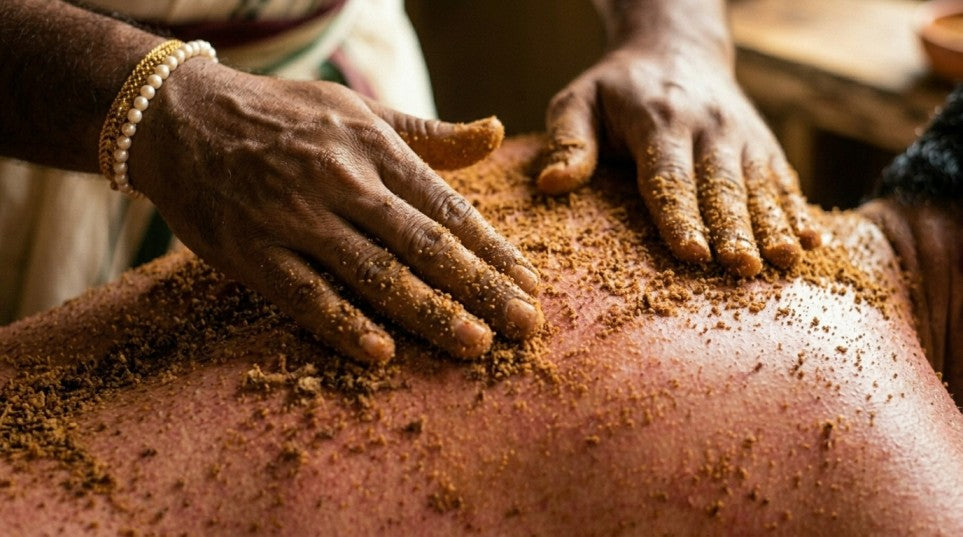
Abhyanga, a medicated oil massage, improves circulation and reduces stiffness by nourishing tissues with warm herbal oils. Janu Basti, commonly recommended for knee osteoarthritis, involves retaining warm medicated oil over the knee joint to enhance lubrication and reduce pain. For spinal involvement, Kati Basti may be employed.
In cases where digestive imbalance contributes significantly, Panchakarma detox procedures may be recommended to eliminate toxins and improve metabolic efficiency.
Each therapy plan is customized based on individual assessment.
Internal Herbal Support
Ayurvedic herbs play a crucial role in strengthening joints and supporting long-term improvement. The selection of herbs depends on individual constitution and stage of degeneration.
Commonly used herbs in osteoarthritis treatment in Ayurveda include:
-
Ashwagandha (Withania somnifera) – Supports tissue strength and reduces Vata
-
Shallaki (Boswellia serrata) – Known for its natural anti-inflammatory properties
-
Guggulu (Commiphora mukul) – Often used in formulations like Yogaraj Guggulu for joint health
-
Dashamoola – A classical combination that balances Vata and reduces pain
-
Rasnadi formulations – Helpful in musculoskeletal disorders
-
Guduchi (Tinospora cordifolia) – Supports immunity and reduces inflammatory components
These herbs are prescribed in specific combinations and dosages tailored to individual needs. Unlike temporary pain suppressants, Ayurvedic herbal support aims to improve structural resilience over time.
The Role of Diet in Managing Osteoarthritis
Diet forms a foundational pillar of osteoarthritis treatment in Ayurveda. Because digestion governs tissue nourishment, correcting dietary habits directly influences joint health.
Warm, freshly prepared meals are encouraged as they support digestive fire and improve nutrient absorption. Nourishing foods help counteract dryness and replenish tissues.
A Vata-pacifying diet typically includes:
-
Warm soups and stews
-
Cooked vegetables
-
Whole grains that are easy to digest
-
Moderate use of ghee
-
Herbal decoctions recommended by the physician
Maintaining consistent eating schedules and consuming warm meals supports tissue repair and reduces joint dryness. Diet is always individualized according to digestive capacity and constitution.
Lifestyle & Daily Routine (Dinacharya) for Osteoarthritis
While therapies and herbal support play a crucial role, lifestyle correction is equally important in managing osteoarthritis. Ayurveda emphasizes Dinacharya, or daily routine, as a foundational tool for maintaining balance and preventing disease progression.
One of the most beneficial practices is regular oil application (Abhyanga) at home. Applying warm medicated oil to affected joints before bathing helps reduce dryness and improve circulation. This simple habit supports joint lubrication and enhances flexibility over time.
Maintaining consistent meal timings is equally important. Eating at regular intervals supports digestive fire and ensures proper tissue nourishment. Skipping meals or eating late at night weakens digestion and may indirectly contribute to tissue depletion.
Gentle, joint-friendly physical activity should be incorporated into the daily routine. Complete inactivity can increase stiffness, while excessive high-impact exercise may aggravate symptoms. Activities such as:
-
Slow walking
-
Gentle stretching
-
Therapeutic yoga under guidance
-
Light strengthening exercise
Incorporating these daily habits creates a supportive environment for therapies and herbal treatment to work more effectively. When lifestyle correction aligns with medical management, osteoarthritis treatment in Ayurveda becomes more sustainable and impactful.
Can Osteoarthritis Be Reversed?
The possibility of reversal depends largely on stage and severity. In early stages, where cartilage damage is minimal, Ayurvedic intervention may significantly slow progression and restore comfort.
In moderate stages, treatment aims to improve mobility, reduce pain, and enhance quality of life. In advanced cases, while structural regeneration may be limited, consistent therapy often reduces reliance on pain medications and may delay surgical intervention.
Early diagnosis and disciplined adherence to therapy greatly influence outcomes.
Final Thoughts
Osteoarthritis is often viewed as an inevitable consequence of aging. However, from an Ayurvedic perspective, its progression can be influenced through timely intervention, dietary correction, herbal support, and personalized therapy.
By addressing Vata imbalance, strengthening tissues, improving digestion, and restoring lubrication, osteoarthritis treatment in Ayurveda offers a holistic and sustainable approach to joint care.
If joint stiffness or knee discomfort has begun affecting daily activities, early consultation and individualized evaluation can significantly improve long-term outcomes.
Frequently Asked Questions About Osteoarthritis Treatment
Q: Can Ayurveda help in osteoarthritis without surgery?
A: Yes, osteoarthritis treatment in Ayurveda may help manage the condition without surgery, especially when addressed in the early or moderate stages. Ayurveda focuses on reducing Vata imbalance, improving joint lubrication, supporting tissue nourishment, and slowing further degeneration. Through a combination of therapies, herbal medicines, dietary correction, and lifestyle modification, many individuals experience reduced pain, improved flexibility, and better mobility over time.
Q: Which Ayurvedic therapies are commonly used for osteoarthritis?
A: Ayurvedic treatment for osteoarthritis often includes therapies such as Abhyanga (medicated oil massage), Janu Basti for knee pain, Kati Basti for spinal involvement, and Panchakarma detox procedures when needed. These therapies are designed to improve circulation, reduce stiffness, nourish joints, and support long-term joint function. The exact combination of treatments varies depending on the stage of osteoarthritis, the affected joints, digestive strength, and the individual’s body constitution.
Q: What foods should be avoided in osteoarthritis according to Ayurveda?
A: According to Ayurveda, individuals with osteoarthritis should avoid foods that aggravate Vata dosha and weaken digestion. This includes cold foods, processed snacks, dry foods, refrigerated leftovers, and irregular eating habits. Such foods may increase dryness within the body and reduce proper tissue nourishment. Instead, Ayurveda encourages warm, freshly prepared meals, cooked vegetables, nourishing soups, moderate use of ghee, and easy-to-digest foods that support joint lubrication and overall digestive health.
Q: What is the difference between osteoarthritis and rheumatoid arthritis in Ayurveda?
A: In Ayurveda, osteoarthritis is described as Sandhivata, a degenerative joint disorder caused mainly by aggravated Vata dosha and gradual tissue depletion. Rheumatoid arthritis, on the other hand, is known as Amavata, where metabolic toxins (Ama) combine with Vata and create inflammation in the joints. Osteoarthritis is generally associated with stiffness, dryness, and degeneration, while rheumatoid arthritis involves significant inflammation, swelling, warmth, and autoimmune activity. Because their root causes differ, the Ayurvedic treatment approach for each condition is also different.
Q: How long does Ayurvedic treatment for osteoarthritis take to show results?
A: The time required to notice improvement depends on the stage and severity of osteoarthritis, as well as the individual’s overall health and consistency with treatment. Some people experience reduced stiffness and pain within a few weeks, while deeper structural improvement may require longer-term management. Ayurveda focuses on gradual and sustainable healing through therapies, herbal support, diet, and lifestyle correction rather than short-term symptom suppression. Early intervention usually leads to better and faster outcomes.
Related post
27
Apr
24
Apr

24
Apr
