 Free & discreet shipping on all prescriptions
 No insurance required


March 17, 2026
Ayurvedic Treatment for Gastritis
Ayurveda, the ancient system of natural healing, has been practiced for thousands of years in India. Its holistic approach to health focuses on balancing the mind, body, and spirit through natural remedies, diet, lifestyle adjustments, and therapies. In this post, we’ll explore the core principles of Ayurveda and how you can incorporate them into your daily routine for a healthier and more balanced life.
Gastritis is often dismissed as simple acidity or occasional stomach irritation. However, when symptoms persist the issue may be deeper than temporary indigestion. Gastritis represents inflammation of the stomach lining, and when this inflammation becomes chronic, it can significantly affect quality of life.
Ayurvedic treatment for gastritis takes a fundamentally different approach. Instead of focusing only on suppressing acid, Ayurveda evaluates the strength of digestion (Agni), the presence of toxins (Ama), and the balance of doshas, especially Pitta. Gastritis is understood not as isolated inflammation, but as a manifestation of systemic digestive imbalance.
In classical Ayurvedic texts, gastritis closely correlates with Amlapitta, a condition characterized by excessive acidity, sour belching, burning sensations, and digestive instability. The aim of treatment is not temporary suppression but restoration of digestive harmony and mucosal healing.
Understanding Gastritis from a Modern Medical Perspective
Gastritis occurs when the protective lining of the stomach becomes inflamed. The stomach naturally produces acid to break down food. However, this acid must be carefully regulated and balanced with protective mucus secretion. When this balance is disturbed, inflammation develops.
Acute gastritis may occur suddenly, often triggered by alcohol intake, painkiller overuse, infections, or dietary excess. Symptoms may be intense but short-lived. Chronic gastritis, on the other hand, develops gradually and may persist for months or years.
Common triggers include:
-
Helicobacter pylori infection
-
Long-term NSAID use
-
Chronic alcohol consumption
-
Severe stress
-
Autoimmune disorders
Inflammation of the stomach lining can compromise digestion, reduce nutrient absorption, and increase vulnerability to ulcer formation. While modern treatment focuses on acid suppression and infection control, recurrence remains common because digestive regulation itself may not be fully restored.
Ayurveda views gastritis not only as acid excess, but as disturbed digestive intelligence.
Types of Gastritis
Gastritis does not present the same way in every individual. Identifying the type and underlying trigger is essential for proper management.
Acute Gastritis
Acute gastritis is characterized by sudden inflammation. Individuals may experience sharp burning pain, nausea, or vomiting after a dietary trigger or medication use. In this stage, inflammation is intense but may not yet be deeply rooted.
From an Ayurvedic perspective, this corresponds to sudden aggravation of Pitta due to heat-inducing factors such as spicy food, alcohol, or emotional stress.
Chronic Gastritis
Chronic gastritis develops over time and may present with milder but recurring symptoms. Individuals often report persistent discomfort after meals, bloating, or irregular appetite.
Ayurvedically, this stage reflects sustained Pitta imbalance combined with accumulated Ama. Over time, mucosal resilience weakens.
H. pylori induced Gastritis
This type involves bacterial infection of the stomach lining. While antibiotics are often prescribed, recurrence may occur if digestive strength remains compromised.
Ayurveda interprets this as weak gut immunity, allowing microbial imbalance to persist.
Stress-Induced Gastritis
Chronic stress significantly increases acid production. Stress also disrupts appetite regulation and gut motility.
This represents combined Pitta and Vata disturbance, often requiring both digestive and emotional correction.
Symptoms of Gastritis
Gastritis symptoms may vary in intensity but often revolve around upper abdominal discomfort. Many patients describe a burning sensation just below the ribcage. Others report nausea after eating or feeling full even after small meals.
Common symptoms include:
-
Burning or gnawing pain in upper abdomen
-
Sour belching
-
Nausea
-
Occasional vomiting
-
Bloating
-
Loss of appetite
-
Frequent burping
-
Loose stools
Unlike GERD, which often causes chest burning due to acid reflux into the esophagus, gastritis discomfort is more localized to the stomach area. Early identification prevents progression toward deeper inflammation.
Gastritis in Ayurveda: The Concept of Amlapitta
Ayurveda explains gastritis primarily under Amlapitta. The word “Amla” denotes sourness or acidity, while “Pitta” represents the fire element responsible for digestion and transformation.
When digestive fire becomes irregular, two processes occur simultaneously:
-
Pitta becomes aggravated, producing excessive acidity.
-
Digestion becomes incomplete, leading to Ama formation.
Ama acts as a toxic irritant that further inflames the gastric lining. Over time, this combination of excessive heat and toxin accumulation damages mucosal integrity.
Therefore, ayurvedic treatment for gastritis must correct digestion, not just cool acidity.
Root Causes of Gastritis According to Ayurveda
The most common triggers is -
- Ayurveda stresses that food should only be consumed when true hunger arises. If meals are layered upon undigested food, incomplete digestion occurs, producing Ama (metabolic toxins). This Ama, when combined with aggravated Pitta, irritates the stomach lining and initiates inflammation.
- Excess intake of spicy, sour, or fried foods is another major contributor. These foods are inherently heat-producing and stimulate excessive acid secretion. Over time, repeated exposure weakens the protective mucosal barrier of the stomach.
- Alcohol and excessive caffeine further intensify this process. Both substances increase gastric acid production and dry out protective tissues, making the lining more vulnerable to irritation.
- Irregular meal timing and skipping meals disturb digestive rhythm. When hunger is ignored, digestive enzymes may begin affecting the stomach lining itself. Similarly, eating late at night when digestion is naturally weaker increases fermentation and acid imbalance.
- Chronic stress, anger, frustration, or emotional suppression aggravate Pitta and Vata simultaneously. Stress hormones increase acid secretion and alter gut motility. This explains why many individuals experience worsening symptoms during periods of emotional strain.
Stages of Gastric Inflammation
Gastritis rarely begins as a severe disease. It progresses in identifiable stages. Recognizing these stages allows for early intervention and prevention of complications such as ulcers.
Stage 1 – Functional Hyperacidity
In the earliest stage, individuals may notice mild burning or discomfort after meals, especially after consuming spicy or acidic foods. Structural damage is typically minimal at this point. The stomach lining is irritated but not deeply inflamed.
From an Ayurvedic perspective, this stage represents early Pitta aggravation. Digestive fire may be strong but irregular, producing excessive acidity.
Stage 2 – Persistent Irritation
As imbalance continues, burning becomes more frequent. Bloating, sour belching, and discomfort after even moderate meals may appear. The mucosal lining becomes more sensitive.
At this stage, Ama begins to accumulate alongside aggravated Pitta. The stomach lining is repeatedly exposed to both heat and toxins, increasing vulnerability.
Stage 3 – Chronic Inflammation
In this stage, symptoms recur regularly. Nausea, heaviness, and upper abdominal pain may become part of daily life. Appetite may fluctuate, and digestion feels unpredictable.
Ayurvedically, this reflects sustained Pitta dominance combined with persistent Ama. Tissue integrity weakens, and healing becomes slower.
Stage 4 – Ulcer Risk
If imbalance remains uncorrected, inflammation may deepen, increasing risk of erosions or ulcers. Severe pain, possible vomiting, and significant digestive disturbance may occur.
At this advanced stage, deeper tissue involvement is present. Structured and supervised intervention becomes essential.
Early management during the first two stages greatly reduces long-term risk.
Diagnosis of Gastritis in Ayurveda
Diagnosis in Ayurveda is comprehensive and individualized. Rather than focusing only on visible symptoms, physicians evaluate the entire digestive ecosystem.
The assessment begins with Nadi Pariksha (pulse examination). Through subtle pulse evaluation, the physician identifies Pitta dominance, digestive strength, and the presence of Ama. This provides insight into internal imbalance that may not yet appear on laboratory reports.
A detailed clinical screening is then conducted, exploring:
-
Appetite pattern and hunger timing
-
Acid flare timing (morning, afternoon, night)
-
Bowel regularity
-
Stress levels
-
Sleep quality
-
Dietary habits
-
Medication history
-
Physical examination
This detailed questioning reveals whether gastritis is primarily heat-driven, toxin-driven, stress-induced, or infection-associated.
Modern diagnostic reports such as endoscopy findings or H. pylori tests may also be reviewed. Ayurveda does not ignore modern diagnostics; instead, it integrates them into a broader systemic understanding.
Treatment is then customized to match the individual’s digestive capacity and stage of inflammation.
Ayurvedic Treatment for Gastritis
Ayurvedic treatment for gastritis focuses on eliminating aggravated Pitta, removing accumulated toxins (Ama), and restoring digestive fire (Agni) to a balanced state. Since gastritis corresponds closely with Amlapitta, where excessive heat and acidity irritate the stomach lining, treatment must address both inflammation and digestive dysfunction simultaneously.
The management begins with correcting digestion through structured dietary regulation and herbal support. But for chronic cases, Gut Reset Therapy forms the core Ayurvedic intervention. Rather than suppressing acid temporarily, this therapy aims to restore digestive intelligence and rebuild mucosal resilience.
The philosophy behind Gut Reset Therapy is simple: when digestion is corrected, acid regulation stabilizes naturally.
The therapy focuses on multiple interconnected goals:
-
Rekindling digestive fire (Agni) without increasing heat
-
Eliminating accumulated Ama
-
Pacifying aggravated Pitta
-
Supporting healing of gastric mucosa
-
Improving gut microbial balance
-
Reducing inflammatory triggers
When Agni is balanced, acid production becomes regulated. When Ama clears, inflammation reduces. When Pitta stabilizes, burning sensations subside.
Unlike generic detox programs, Gut Reset Therapy is personalized. The duration, dietary protocol, and herbal combinations are determined based on constitution and stage of inflammation.
This structured approach addresses the root cause of gastritis rather than masking symptoms.
Internal Herbal Support for Gastritis
Herbal formulations play a central role in soothing inflammation and rebuilding mucosal integrity after Pitta reduction. In gastritis management, herbs are selected not only for their cooling properties but also for their ability to restore digestive balance and support tissue healing.
The following herbs are commonly used in Ayurvedic treatment for gastritis:
Yashtimadhu (Licorice)
Yashtimadhu is well-known for its mucosal protective and healing properties. It helps coat and soothe the irritated stomach lining, reducing burning and promoting tissue repair. It is especially useful when inflammation has persisted for some time.
Amalaki (Indian Gooseberry)
Amalaki is a potent Pitta-balancing herb that reduces acidity while simultaneously strengthening digestion. Unlike simple cooling agents, Amalaki supports digestive intelligence without suppressing Agni. It also provides antioxidant support that helps
repair inflamed tissue.
Guduchi (Tinospora cordifolia)
Guduchi is known for its immune-modulating and anti-inflammatory properties. In cases where gastritis is chronic or linked with H. pylori infection, Guduchi supports immune balance and reduces inflammatory burden while strengthening overall digestive resilience.
Musta (Cyperus rotundus)
Musta plays an important role in regulating digestion and reducing bloating. It helps normalize irregular acid secretion and supports correction of Ama accumulation. It is particularly useful when gastritis is accompanied by heaviness or digestive sluggishness.
These herbs are prescribed in carefully selected combinations based on:
-
Severity of Pitta aggravation
-
Presence of Ama
-
Stage of gastric inflammation
-
Individual constitution
Herbal treatment is rarely standalone. It works synergistically with dietary correction and, when required, Virechana detox.
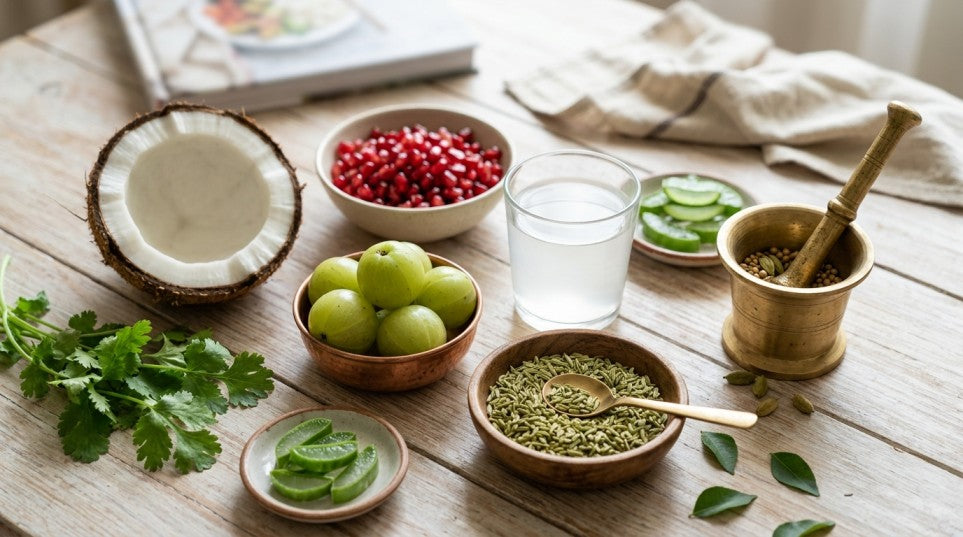
Ayurvedic Diet for Gastritis
Ayurvedic diet is central to healing because food directly influences acid production and mucosal irritation. The objective is not bland starvation but digestive harmony.
Warm, mildly spiced, and easy-to-digest meals are encouraged. Overly spicy, oily, or fermented foods increase Pitta and should be minimized during active inflammation.
Recommended foods include:
-
Soft rice preparations
-
Steamed vegetables
-
Coconut water
-
Fennel tea
-
Coriander-infused water
Foods to avoid include:
-
Spicy food
-
Fried items
-
Alcohol
-
Coffee
-
Fermented food
-
Processed foods
Consistent meal timing is essential. Eating at regular intervals strengthens digestive rhythm and prevents erratic acid secretion.
Lifestyle & Stress Management
Stress is one of the most overlooked contributors to gastritis. Emotional tension directly influences gastric acid secretion and gut motility.
When stress is chronic, cortisol levels remain elevated. This increases acid production and reduces mucosal protection. Many individuals notice symptom flares during emotionally demanding periods.
Ayurvedic Lifestyle correction includes:
-
Eating in a calm environment
-
Avoiding late dinners
-
Maintaining consistent sleep patterns
-
Practicing breathing exercises
-
Reducing screen exposure before bedtime
When stress stabilizes, Pitta gradually returns to balance and digestive coordination improves.
Can Gastritis Be Permanently Cured in Ayurveda?
Acute gastritis often resolves quickly with proper dietary correction and Pitta balancing. However, chronic gastritis requires structured digestive restoration.
When Agni strengthens, Ama clears, and Pitta stabilizes, recurrence risk significantly reduces. However, long-term success depends on maintaining digestive discipline.
Sustainable healing requires:
-
Consistent meal timing
-
Stress management
-
Avoidance of irritant foods
-
Periodic follow-up when necessary
Ayurveda offers long-term digestive resilience when lifestyle and treatment align rather than symptomatic treatment.
Final Thoughts
Gastritis is more than excess acid. It reflects digestive imbalance, toxin accumulation, and aggravated Pitta.
By restoring Agni, eliminating Ama, pacifying Pitta, and stabilizing lifestyle rhythm, ayurvedic treatment for gastritis provides a sustainable pathway toward healing.
Frequently Asked Questions About Gastritis & Ayurvedic Gut Healing
Q: What are the early symptoms of gastritis?
A: Early symptoms of gastritis often include burning pain in the upper abdomen, sour belching, bloating, nausea, frequent burping, loss of appetite, and discomfort after meals. Some individuals may also experience heaviness in the stomach or feel full very quickly while eating. In many cases, these symptoms begin mildly and gradually become more persistent if digestive imbalance and inflammation are not addressed early.
Q: Can Ayurveda permanently cure chronic gastritis?
A: Ayurvedic treatment for gastritis focuses on correcting the root cause of recurring acidity and inflammation rather than providing temporary acid suppression alone. By restoring digestive fire (Agni), eliminating toxins (Ama), pacifying aggravated Pitta dosha, and improving mucosal healing, Ayurveda aims to create long-term digestive stability. Many individuals with chronic gastritis experience significant and sustainable improvement when treatment is combined with proper diet, stress management, and lifestyle correction.
Q: Which foods should be avoided in gastritis according to Ayurveda?
A: Ayurveda recommends avoiding foods that aggravate Pitta and irritate the stomach lining. This includes spicy foods, fried items, alcohol, excessive coffee, fermented foods, processed snacks, and highly acidic meals. Eating at irregular times, overeating, and consuming food late at night may also worsen symptoms. Instead, warm, freshly prepared, easy-to-digest meals are generally encouraged to support healing of the stomach lining and stabilize acid production.
Q: How does stress affect gastritis and acidity?
A: Chronic stress can significantly worsen gastritis by increasing acid production and disturbing digestive coordination. Stress also aggravates both Pitta and Vata dosha, leading to symptoms such as burning sensation, bloating, irregular appetite, nausea, and digestive discomfort. Many people notice flare-ups during emotionally stressful periods. Ayurveda therefore considers stress management, proper sleep, breathing exercises, and lifestyle balance essential parts of gastritis treatment.
Q: What is the difference between gastritis, acidity, and acid reflux?
A: Although these conditions are related, they are not exactly the same. Gastritis refers to inflammation of the stomach lining, often causing upper abdominal burning and nausea. Acidity generally refers to excessive acid production and digestive irritation. Acid reflux or GERD occurs when stomach acid flows upward into the esophagus, causing chest burning and throat discomfort. Ayurveda evaluates the underlying digestive imbalance behind each condition before creating an individualized treatment approach.
Related post
27
Apr

24
Apr

24
Apr
