 Free & discreet shipping on all prescriptions
 No insurance required


March 26, 2026
Ayurvedic Herbs for Joint Pain
Ayurveda, the ancient system of natural healing, has been practiced for thousands of years in India. Its holistic approach to health focuses on balancing the mind, body, and spirit through natural remedies, diet, lifestyle adjustments, and therapies. In this post, we’ll explore the core principles of Ayurveda and how you can incorporate them into your daily routine for a healthier and more balanced life.
Joint pain can begin subtly, mild stiffness in the knees, discomfort in the fingers, or tightness in the lower back after prolonged sitting. Over time, this discomfort may become persistent, affecting mobility and daily activities. Many individuals search for ayurvedic herbs for joint pain hoping to find natural and long-term relief.
Ayurveda offers powerful herbal support for joint health. However, herbs are not simply natural painkillers. They work by addressing the underlying imbalance responsible for joint degeneration, inflammation, or stiffness.
In classical Ayurvedic texts, degenerative joint pain is described under Sandhivata, a condition primarily caused by aggravated Vata dosha localizing in the joints. In inflammatory arthritis, the condition resembles Amavata, where toxins (Ama) combine with Vata and lodge in joint spaces.
Understanding this distinction is essential before choosing herbs.
Understanding Joint Pain in Ayurveda
Ayurveda does not treat all joint pain as identical. The nature of the pain determines the treatment approach.
In Sandhivata (degenerative joint pain), Vata increases due to aging, dryness, irregular lifestyle, or tissue depletion. This leads to cracking sounds, stiffness, reduced lubrication, and gradual cartilage thinning.
In Amavata (inflammatory arthritis), weak digestion leads to toxin accumulation. These toxins combine with Vata and create swelling, warmth, and intense pain in joints.
Pitta involvement may cause burning sensation and redness, while Kapha involvement may produce heaviness and stiffness.
Ayurvedic herbs for joint pain are selected based on these underlying patterns, not just symptoms.
How Ayurvedic Herbs Help Joint Pain
Herbal therapy in Ayurveda works through multiple mechanisms.
Some herbs reduce inflammation and swelling. Others improve circulation and enhance synovial lubrication. Certain herbs strengthen Asthi Dhatu (bone tissue) and support cartilage nourishment. Others improve digestion to prevent toxin formation.
Ayurvedic herbs may:
-
Pacify aggravated Vata
-
Reduce inflammatory Pitta
-
Eliminate Ama toxins
-
Improve joint lubrication
-
Strengthen connective tissues
-
Enhance tissue nourishment
-
Support long-term mobility
The goal is not temporary suppression of pain but structural and metabolic correction.
Most Effective Ayurvedic Herbs for Joint Pain
Ashwagandha (Withania somnifera)
Ashwagandha is widely used for Vata-dominant joint pain. It strengthens musculoskeletal tissues and supports cartilage resilience.
In degenerative conditions such as osteoarthritis, Ashwagandha helps reduce stiffness and improve joint strength over time. It also acts as an adaptogen, reducing stress-related Vata aggravation that can worsen pain perception.
Shallaki (Boswellia serrata)
Shallaki is known for its anti-inflammatory properties. It is particularly helpful in reducing joint swelling and discomfort.
In inflammatory joint conditions, Shallaki helps reduce Pitta-driven inflammation without the gastrointestinal side effects often associated with conventional anti-inflammatory medications.
Guggulu (Commiphora mukul)
Guggulu is one of the most important Ayurvedic herbs for joint pain. It improves circulation and helps remove Ama toxins from joint tissues.
Classical formulations such as Yogaraj Guggulu and Mahayogaraj Guggulu are often prescribed in Sandhivata and Amavata conditions.
Guggulu also supports metabolism and tissue repair.
Rasna
Rasna is traditionally used for musculoskeletal pain and stiffness. It helps reduce Vata accumulation in joints and is commonly used in formulations for chronic arthritis.
Nirgundi (Vitex negundo)
Nirgundi is often used both internally and externally. It reduces swelling and improves circulation around affected joints.
In cases of localized joint pain, Nirgundi oil may also be used in therapeutic applications.
Dashamoola
Dashamoola is a classical herbal combination of ten roots. It balances Vata and reduces inflammation.
It is particularly useful when joint pain is accompanied by nerve irritation or muscle tightness.
Guduchi (Tinospora cordifolia)
Guduchi supports immune balance and reduces systemic inflammation. It is especially useful in autoimmune joint disorders such as rheumatoid arthritis.
It also improves digestion and helps reduce toxin accumulation.
Bala
Bala strengthens connective tissue and improves joint stability. It is often recommended in Vata-depletion cases where tissue weakness contributes to joint instability.
Eranda (Castor)
Castor preparations are traditionally used to reduce Vata in joints. Eranda may also support bowel regularity, which indirectly reduces toxin accumulation.
When Herbs Alone Are Not Enough
Ayurvedic herbs for joint pain provide significant internal support, but joint disorders often develop gradually over years. By the time stiffness, swelling, or reduced mobility becomes persistent, structural changes may already be underway. In such situations, relying on herbs alone may not be sufficient for optimal recovery.
For example, in advanced osteoarthritis where cartilage thin ning and joint space narrowing are evident, herbs can help reduce inflammation and slow progression, but they may not fully restore lubrication without supportive external therapies. Similarly, in rheumatoid arthritis or Ama-dominant joint disorders, toxin accumulation may block channels so deeply that detoxification becomes necessary before strengthening herbs can be effective.
In chronic cases, individuals often experience:
-
Morning stiffness lasting longer than 30 minutes
-
Persistent swelling
-
Visible joint deformity
-
Restricted range of motion
-
Pain even at rest
These signs suggest deeper dosha involvement and possible tissue depletion (Asthi Dhatu Kshaya).
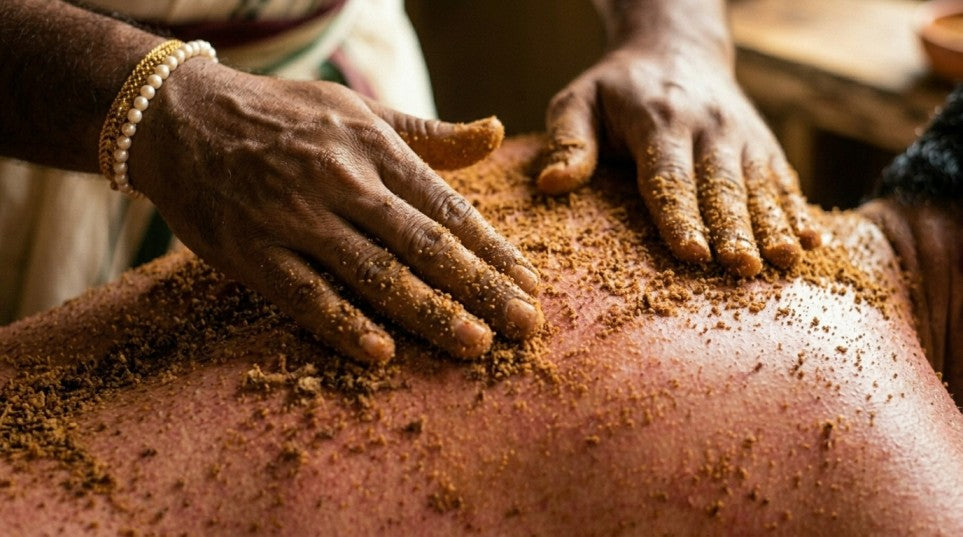
In such scenarios, therapies like Panchakarma, Janu Basti, Kati Basti, Abhyanga, or Elakizhi enhance circulation and improve the delivery of herbal benefits to affected tissues. Detox procedures may clear accumulated Ama, creating a cleaner internal environment for herbs to act effectively.
Role of Diet Alongside Herbs
Diet is not a secondary component in joint health, it is foundational. In Ayurveda, digestion (Agni) governs tissue nourishment. When Agni weakens, improperly digested food transforms into Ama, which may accumulate in joints and worsen pain.
Even the most effective ayurvedic herbs for joint pain may produce limited benefit if dietary habits continue to aggravate Vata or promote toxin formation.
Cold, dry, and processed foods increase Vata and contribute to stiffness. Excessively sour, fermented, and spicy foods may aggravate Pitta and intensify inflammation. Heavy, oily foods may impair digestion and promote Ama formation.
A supportive dietary framework includes:
-
Warm, freshly cooked meals
-
Light but nourishing preparations
-
Moderate use of ghee to support lubrication
-
Easily digestible grains
-
Steamed vegetables
-
Digestive spices such as ginger, cumin, ajwain, and turmeric
Consistent meal timing is equally important. Irregular eating weakens digestive fire and indirectly affects joint nourishment.
Hydration should also be balanced. Warm water is often preferred over cold beverages, especially in Vata-dominant joint pain.
When diet aligns with herbal therapy, tissue repair improves and recurrence risk decreases.
Are Ayurvedic Herbs Safe for Long-Term Joint Care?
Ayurvedic herbs are generally safe when prescribed under professional supervision, particularly because they are designed to restore balance rather than force immediate suppression of symptoms.
However, long-term joint care requires thoughtful planning. Not all herbs are suitable for indefinite use without monitoring. Certain detoxifying formulations may need periodic reassessment. Strengthening herbs may require dosage adjustments based on digestive capacity.
Safety considerations include:
-
Individual constitution (Prakriti)
-
Stage of joint degeneration
-
Digestive strength
-
Age-related factors
-
Concurrent medications
-
Presence of autoimmune involvement
For example, strong detoxifying herbs may not be ideal in individuals with weak digestion or advanced tissue depletion. Conversely, purely strengthening herbs may not be appropriate when inflammation and toxin accumulation remain unaddressed.
Periodic follow-up ensures that therapy evolves as the condition improves. Ayurvedic medicine emphasizes personalization, not generalized long-term supplementation.
When properly supervised, herbal therapy becomes a safe and sustainable part of joint care.
Integrating Herbal Support with Therapies
The most effective management of chronic joint pain combines internal herbal therapy with external therapeutic procedures. Ayurveda views the body as an integrated system , addressing only one dimension may produce partial results.
Internal herbs work to:
-
Reduce systemic inflammation
-
Improve circulation
-
Remove toxins
-
Strengthen connective tissue
-
Support cartilage nourishment
While, external therapies work to:
-
Enhance localized blood flow
-
Improve joint lubrication
-
Reduce stiffness
-
Relieve muscle tension
-
Deliver medicated oils directly to affected tissues
For example, in knee osteoarthritis, herbal formulations may reduce systemic Vata aggravation while Janu Basti retains warm medicated oil over the knee joint to improve lubrication.
In lower back pain, Kati Basti complements internal herbs by directly targeting the lumbar region.
In inflammatory arthritis, Panchakarma detox may precede strengthening therapy to ensure toxins are cleared before tissue-building herbs are introduced.
Integration also includes lifestyle regulation, correcting posture, incorporating gentle movement, improving sleep quality, and reducing stress.
When herbal support is synchronized with therapies and lifestyle alignment, joint health improves more comprehensively.
Ayurvedic Herbs for Joint Pain: Questions Patients Commonly Ask
Q: Which Ayurvedic herbs are most commonly used for arthritis and joint stiffness?
A: Ayurveda uses different herbs depending on whether the joint problem is degenerative, inflammatory, or associated with toxin accumulation. Ashwagandha is commonly used for weakness and stiffness in osteoarthritis, Shallaki is valued for reducing inflammation and swelling, while Guggulu formulations are widely used to improve circulation and remove Ama toxins from joints. Herbs such as Rasna, Nirgundi, Dashamoola, Guduchi, and Bala are also selected based on the type of pain, swelling pattern, tissue depletion, and dosha involvement rather than being prescribed as one universal solution.
Q: Why do some joint pains worsen in cold weather according to Ayurveda?
A: Ayurveda associates cold-weather joint pain primarily with aggravated Vata dosha. Cold temperatures increase dryness, stiffness, reduced circulation, and joint instability, especially in individuals already experiencing cartilage thinning or tissue depletion. This is why many people notice increased cracking, morning stiffness, and reduced flexibility during colder months. Warm therapies, Vata-pacifying diet, medicated oils, and circulation-supporting herbs are therefore emphasized in Ayurvedic joint care.
Q: Can Ayurvedic herbs help reduce inflammation in rheumatoid arthritis naturally?
A: Yes, certain Ayurvedic herbs are commonly used to support inflammatory regulation in conditions resembling rheumatoid arthritis (Amavata). Herbs such as Guduchi, Shallaki, and Guggulu help reduce inflammatory burden, improve digestion, and support toxin clearance from joints. Ayurveda also focuses heavily on correcting weak digestion because improperly digested metabolic toxins (Ama) are believed to play a central role in inflammatory arthritis. In chronic cases, detoxification therapies such as Panchakarma are often integrated alongside herbal support for deeper correction.
Q: Why is digestion considered important in Ayurvedic treatment for joint pain?
A: Ayurveda considers digestion (Agni) the foundation of tissue nourishment and long-term joint health. When digestion weakens, food is not metabolized properly and toxins (Ama) begin accumulating in the body. These toxins may lodge in joints and contribute to inflammation, swelling, heaviness, and stiffness. This is why joint treatment in Ayurveda often includes digestive correction, warm easily digestible meals, metabolic-supportive herbs, and dietary changes alongside pain management therapies. Without improving digestion, even strong herbs may provide only temporary benefit.
Q: When are therapies like Janu Basti or Panchakarma needed along with herbs?
A: Herbal support alone may not always be sufficient in individuals with advanced osteoarthritis, chronic stiffness, restricted movement, visible swelling, or long-standing inflammatory arthritis. In such cases, external therapies help improve circulation, joint lubrication, and delivery of herbal benefits to affected tissues. Janu Basti is commonly used for knee osteoarthritis, Kati Basti for lower back involvement, while Panchakarma may be recommended when toxin accumulation and systemic inflammation are significant. Combining herbs with therapies often produces more sustainable improvement than relying on supplements alone.
Related post
27
Apr
24
Apr

24
Apr
