 Free & discreet shipping on all prescriptions
 No insurance required


April 16, 2026
Panchakarma Treatment for High Blood Pressure
Ayurveda, the ancient system of natural healing, has been practiced for thousands of years in India. Its holistic approach to health focuses on balancing the mind, body, and spirit through natural remedies, diet, lifestyle adjustments, and therapies. In this post, we’ll explore the core principles of Ayurveda and how you can incorporate them into your daily routine for a healthier and more balanced life.
Your blood pressure numbers are controlled, the medication sees to that. But something else is not controlled: the persistent fatigue, the dull headache that appears by mid-afternoon, the dizziness when you stand up too quickly, the disturbed sleep, the sense that your body is working harder than it should. You are managing hypertension without feeling healthy. And somewhere underneath the daily tablet, the question sits: is this how it will always be?
Ayurveda offers a starting point. Hypertension is described in classical Ayurvedic texts as Rakta-gata Vata, is not understood as a disease of the arteries. It is a systemic condition: the expression of deeper imbalances in the nervous system, digestive channels, and vascular tissue that, once addressed, can allow the pressure to normalise from within. Panchakarma is the intervention that operates at this root level.
An important note on safety: Panchakarma treatment for high blood pressure is always designed to complement, not replace, existing antihypertensive medication. Blood pressure is monitored before and after each session throughout the programme.
How Ayurveda Understands Hypertension: Raktachapa
Most Ayurvedic content on hypertension mentions 'Vata-Pitta imbalance' as the cause and stops there. This explanation, while directionally accurate, tells the patient very little about why their specific presentation of high blood pressure developed, or why the treatment approach needs to be individualised to produce lasting results.
Vata-Type Hypertension: The Stress-Driven Presentation
Vata hypertension is driven by nervous system dysregulation, chronic stress, overwork, irregular lifestyle, insufficient sleep, excessive mental activity, and the sustained activation of the sympathetic fight-or-flight response. When the nervous system is chronically overstimulated, it drives sustained elevation of systolic pressure through increased cardiac output and peripheral vascular resistance.
Clinically, Vata hypertension presents as variable blood pressure, sometimes normal and sometimes very high, with accompanying palpitations, anxiety, difficulty sleeping, restlessness, dryness of skin and mucous membranes, and an overall sense of depletion underneath the agitation. It is increasingly the dominant presentation among working-age adults in high-pressure professional environments. The pressure often spikes under stress and comes down during rest, which is the Vata pattern of erratic, movement-driven excess.
Pitta-Type Hypertension: The Inflammatory Presentation
Pitta governs heat, transformation, and metabolic activity. Pitta hypertension is driven by the accumulation of excess metabolic heat in the vascular channels, a diet high in spice, alcohol, and acidic foods, heavy alcohol use, and the inflammatory burden of a high-metabolic lifestyle. When Pitta accumulates in the Raktavaha srotas (blood channels), it creates inflammatory changes in the arterial walls, stiffness, reduced elasticity, endothelial dysfunction, that produce sustained pressure elevation.
Pitta hypertension presents as consistently elevated BP that does not respond dramatically to rest, accompanied by flushing and redness, intense headaches (often felt at the temples or back of the skull), intense and impatient temperament. Middle-aged patients with metabolic syndrome often have this presentation.
Kapha-Type Hypertension: The Metabolic Presentation
Kapha governs structure, accumulation, and fluid. Kapha hypertension is driven by the accumulation of metabolic waste (Ama) and excess fat tissue (Meda dhatu) in the vascular channels, which produces a physical increase in blood viscosity and vascular resistance. This is the Ayurvedic description of what modern medicine identifies as hypertension secondary to metabolic syndrome: the combination of obesity, high cholesterol, insulin resistance, and fluid retention.
It is the most metabolically complex presentation and the one most closely linked to long-term cardiovascular risk. The metabolic root that connects Kapha hypertension with Type 2 Diabetes is the same Ama accumulation and Agni impairment, which is why these two conditions so frequently coexist and why addressing one through Panchakarma typically produces meaningful improvement in both.
The Role of Ama in the Vascular Channels
Regardless of which dosha type is dominant, all three presentations of hypertension involve the accumulation of Ama in the Rasavaha srotas (plasma channels) and Raktavaha srotas (blood channels). Ama is the toxic residue produced when digestive fire is insufficient to fully process food, metabolic by-products, and environmental toxins. It is dense, sticky, and channel-blocking. It increases the viscosity of blood, reduces the elasticity of arterial walls, and narrows the channels through which blood flows. The body's compensatory response to this increased vascular resistance is to increase the force of cardiac contraction, producing elevated blood pressure.
This explains why dietary change alone, even when sustained, rarely normalises blood pressure in patients with longstanding hypertension. The Ama that has already accumulated in the vascular channels cannot be dissolved by avoiding new accumulation. It requires active detoxification at the channel level. This is precisely what Panchakarma provides.
Why Panchakarma Is the Logical Intervention for Hypertension
Antihypertensive medications are designed to change the pressure measurement through three main mechanisms:
-
vasodilation (expanding blood vessels to reduce resistance),
-
diuresis (reducing blood volume through increased urinary output),
-
cardiac output reduction (slowing the heart or reducing the force of contraction).
All three mechanisms address the consequence of hypertension without touching its cause.
Hypertension has three structural root drivers that medication does not address: nervous system dysregulation driving sustained sympathetic tone (Vata component), vascular inflammation and arterial stiffness (Pitta component), and metabolic Ama accumulation in the vascular channels increasing resistance (Kapha component). Each requires a different therapeutic approach, and together, they require a systemic intervention rather than a single-mechanism pharmaceutical.
Panchakarma addresses all three components simultaneously through its multi-procedure, three-phase protocol. The preparatory phase loosens and mobilises Ama from the vascular channels. The main procedures channel it out through the appropriate routes, liver and intestinal channels for Pitta, colon for Vata, metabolic channels for Kapha. The recovery phase rebuilds the vascular tissue with nourishing medicated oils and targeted herbs, restoring the elasticity and conductivity that Ama had compromised.
Key Panchakarma Therapies for High Blood Pressure
The following therapies are the most commonly prescribed in a Panchakarma protocol for hypertension. The selection and combination for each patient is determined by the treating doctor based on the individual assessment.
Shirodhara: The Neurological Reset
Shirodhara is the most directly antihypertensive therapy in the Ayurvedic toolkit, and the one that most clearly explains why Panchakarma produces results that lifestyle change alone cannot. In Shirodhara, warm medicated oil is poured in a sustained, rhythmic stream across the Ajna marma, the energy centre at the forehead corresponding to the hypothalamic and pituitary region.
The physiological mechanism is well-understood: the sustained thermal and mechanical stimulation of the forehead activates the parasympathetic nervous system through the trigeminal nerve pathway, directly suppressing sympathetic tone. The result is a measurable reduction in heart rate, a lowering of plasma cortisol, and a reduction in the peripheral vascular resistance that drives diastolic BP elevation.
Abhyanga
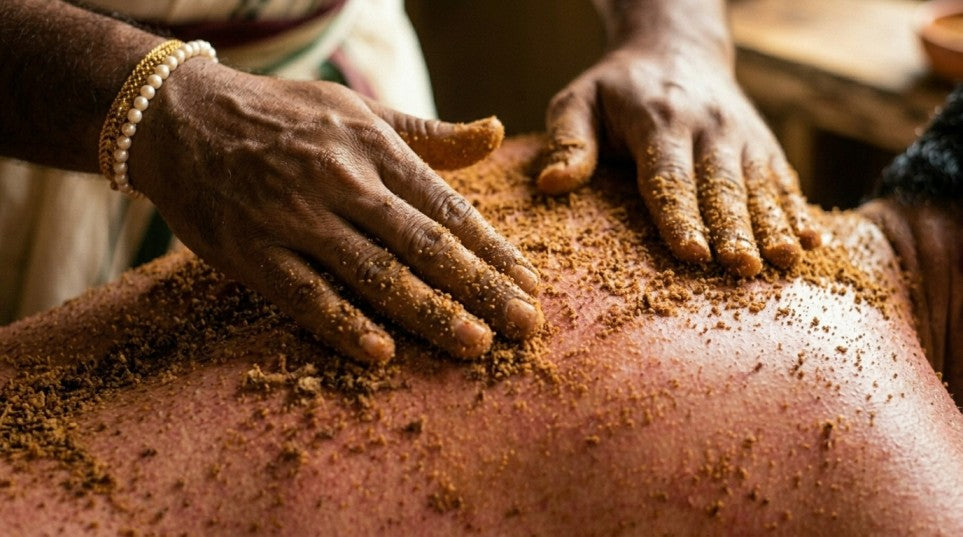
Abhyanga is the systematic application of warm medicated oils across the entire body by trained therapists using specific pressure and direction. For hypertension, its primary mechanism is the reduction of peripheral vascular resistance, one of the main drivers of elevated diastolic pressure, through two pathways: the parasympathetic activation produced by sustained skin-receptor stimulation, and the direct effect of medicated oils penetrating the skin to reach and relax the smooth muscle of peripheral blood vessels.
Research has documented measurable reductions in both systolic and diastolic blood pressure following Abhyanga within structured programmes. More relevantly for hypertension patients, the nervous system calming produced by Abhyanga carries over well beyond the session itself, patients consistently report improved sleep quality, reduced anxiety, and a general reduction in the background tension that perpetuates stress-driven BP elevation.
Virechana
Virechana (therapeutic purgation) is the primary Pitta-eliminating procedure in Panchakarma and the cornerstone of treatment for inflammatory, Pitta-dominant hypertension. Through controlled purgation of the liver, gallbladder, and small intestinal channels, Virechana systematically removes accumulated Pitta-dominant Ama from the vascular system.
For hypertension, the hepatic clearing accomplished by Virechana is particularly significant. The liver is the primary site of cholesterol metabolism, lipid processing, and the clearance of vascular inflammatory mediators. When the liver is burdened by excess Pitta and toxic accumulation, as it is in metabolic syndrome, fatty liver disease, and chronic alcohol use, it cannot perform these functions efficiently. Virechana restores hepatic channel clarity, directly reducing this inflammatory vascular burden.
Vasti
Vasti (medicated enema) is the most powerful Vata-pacifying procedure in Ayurveda, and since Vata dysregulation at the autonomic nervous system level is the most common root driver of sustained hypertension, Vasti is a cornerstone of most hypertension protocols.
The colon is described in Ayurveda as the primary seat of Vata, and the gut-brain axis in modern physiology affirms this: the enteric nervous system of the colon communicates bidirectionally with the central nervous system through the vagus nerve, directly influencing autonomic tone. Basti that pacifies colonic Vata reliably reduces the sympathetic nervous system hyperactivation that drives sustained BP elevation, working at a deeper and more systemic level than any surface-applied therapy alone.
Nasya
Nasya, the administration of medicated oil through the nasal passages, is the most direct route to the brain region in Ayurvedic therapy. Medicated oils delivered through the nasal passage cross the blood-brain barrier via the olfactory and trigeminal nerve pathways, reaching the hypothalamic and pituitary regions with unusual efficiency. For hypertension patients with a neurological or component, those whose high blood pressure is accompanied by neck stiffness, occipital headaches, or a diagnosis of cervical spondylosis, Nasya is an essential addition to the protocol.
How Panchakarma Lowers Blood Pressure: The Physiological Pathways
The following table maps each driver of hypertension to its Ayurvedic root, and to the specific Panchakarma intervention that addresses it. This is the framework that guides treatment personalisation at Yuvrit — not a standard protocol, but a diagnostic map.
| Hypertension Driver | Ayurvedic Root Cause | Panchakarma Intervention |
|---|---|---|
| Chronic sympathetic nervous system activation | Vata aggravation in the nervous channels (Majjavaha srotas) | Shirodhara, Abhyanga, Basti — parasympathetic activation and Vata pacification |
| Arterial stiffness and endothelial inflammation | Pitta-dominant Ama in the blood channels (Raktavaha srotas) | Virechana and Takradhara — hepatic channel clearing and vascular inflammation reduction |
| Metabolic Ama increasing blood viscosity and vascular resistance | Kapha accumulation in the plasma channels (Rasavaha srotas) and Meda dhatu | Basti, Virechana, dietary protocol — Ama clearance and metabolic channel restoration |
| Cortisol-driven fluid retention and BP elevation | HPA axis hyperactivation from sustained Vata disturbance | Shirodhara, Nasya, Ashwagandha and Brahmi formulations |
| Mechanical compression of vertebral arteries from cervical tension | Vata-Kapha blockage in the cervical channels (Shiras srotas) | Nasya, Greeva Basti, cervical Abhyanga |
| Reduced vascular elasticity from cholesterol and lipid accumulation | Meda dhatu excess blocking Rasavaha srotas | Virechana, Lekhana Basti, Arjuna and Punarnava formulations |
This map explains why a personalised Panchakarma protocol for hypertension produces more sustained results than any single-mechanism approach: because hypertension is rarely driven by just one of these factors, and the programme addresses whichever combination is present in the individual patient.
Final thoughts
High blood pressure does not have to be a lifelong medication dependency. When the conditions that produce it, the vascular Ama accumulation, the nervous system hyperactivation, the inflammatory arterial burden, are addressed through a genuinely systemic intervention, the pressure has the conditions it needs to normalise from within.
Panchakarma treatment for high blood pressure is a doctor-led, clinically structured intervention that is personalised to your dosha type, your specific presentation of hypertension, your co-existing health conditions, and your current medication status. Blood pressure is monitored throughout. The programme is designed to work safely alongside your existing antihypertensives, with the long-term goal of creating the physiological conditions under which medication dependency can be safely and gradually reduced.
Frequently Asked Questions
Q. Can I stop my blood pressure medication after Panchakarma?
A. Not immediately, and not without medical supervision. The goal of Panchakarma treatment for hypertension is to address the root causes that require ongoing medication, creating the conditions under which a gradual, medically supervised reduction in medication becomes possible over months. Most patients who complete a full programme and maintain the recommended diet and lifestyle changes find that their BP readings stabilise at lower levels at which point a conversation with both their Yuvrit doctor and their cardiologist about dosage reduction can begin. Never stop or reduce antihypertensive medication independently.
Q. Is Panchakarma safe if my blood pressure is very high (Stage 2 hypertension)?
A. Yes, with appropriate modification. Stage 2 hypertension (readings consistently above 140/90) is not a contraindication for Panchakarma but does require a more conservative programme design, especially in the early sessions. More intensive procedures like Virechana may be deferred until initial BP stabilisation is achieved through Shirodhara, Abhyanga, and herbal management. Blood pressure is monitored throughout every session. If you have Stage 2 hypertension, this should be disclosed in full at the initial consultation.
Q. How long before I see blood pressure improvement from Panchakarma?
A. Many patients experience measurable reductions in BP readings within the first week of the programme, as Shirodhara and Abhyanga produce relatively rapid parasympathetic activation. Sustained improvement where readings remain lower between sessions and not just immediately after typically develops over four to eight weeks of the programme and the post-programme herbal protocol. Full stabilisation at a meaningfully lower baseline generally takes three to six months of consistent treatment and lifestyle maintenance.
Q. Can Panchakarma help if my hypertension is caused by kidney disease?
A. Renovascular hypertension BP elevated due to impaired kidney function requires careful management. Panchakarma can be beneficial in addressing the metabolic and inflammatory components that contribute to progressive kidney disease, but the programme design must account for reduced renal clearance when selecting herbal formulations and the intensity of detoxification procedures. This is a case where the initial consultation with Yuvrit's doctor, including full disclosure of kidney function parameters, is especially important.
Q. Is Shirodhara safe for high blood pressure patients?
A. Shirodhara is not only safe for hypertension patients it is one of the primary therapeutic tools for the condition. The concern sometimes raised is that the supine position and the warmth of the oil might cause a transient BP change in very sensitive patients. In practice, the parasympathetic activation produced by Shirodhara typically causes a measurable BP reduction during and immediately after the session. The procedure is conducted with BP monitoring and by trained therapists who adjust the oil temperature and session duration based on the patient's response.
Related post
27
Apr
24
Apr

24
Apr
