 Free & discreet shipping on all prescriptions
 No insurance required


April 16, 2026
Kati Basti for Slip Disc
Ayurveda, the ancient system of natural healing, has been practiced for thousands of years in India. Its holistic approach to health focuses on balancing the mind, body, and spirit through natural remedies, diet, lifestyle adjustments, and therapies. In this post, we’ll explore the core principles of Ayurveda and how you can incorporate them into your daily routine for a healthier and more balanced life.
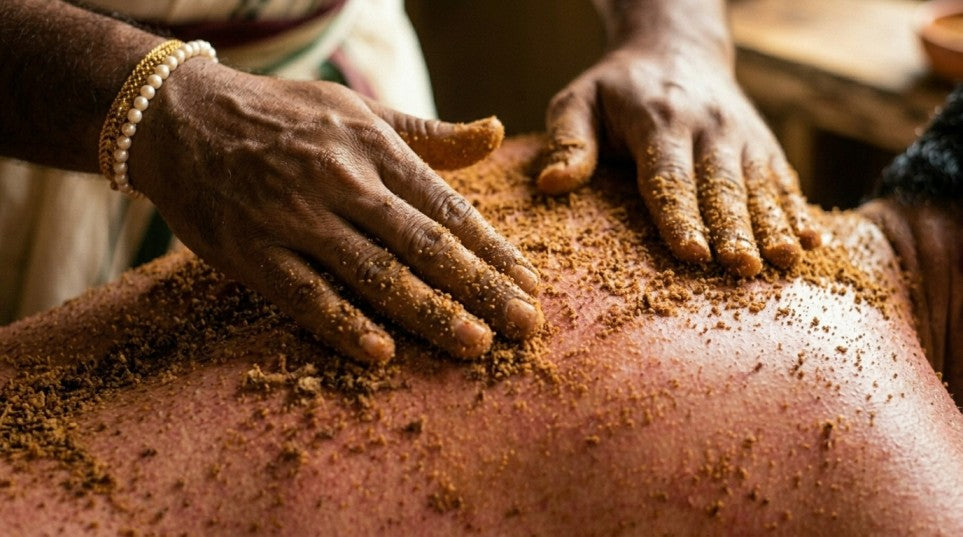
Kati Basti is an Ayurvedic oil-retention therapy specifically designed to treat lower back disorders including slip disc (herniated disc), sciatica, spondylitis, and degenerative disc disease. In this treatment, warm medicated oil is held in a dough reservoir placed over the lumbar spine for 30–45 minutes, allowing therapeutic oils to penetrate deep into the disc space, muscles, and nerve tissue.
In Ayurveda, slip disc is understood as a Vata disorder aggravated Vata dosha causes dehydration of the intervertebral discs, rigidity in the spinal muscles, and nerve irritation. Kati Basti directly pacifies this localised Vata imbalance, reducing disc inflammation and creating the conditions for the body to naturally reduce disc herniation without surgery.
Kati Basti done as a standalone procedure, without proper prior treatment, without the correct oil for the patient's specific disc condition, and without the broader Ayurvedic protocol that addresses what caused the disc to herniate in the first place, will produce temporary relief at best.
The same principle applies across all structural back conditions at Yuvrit. Whether the underlying diagnosis is a herniated disc, lower back pain, or degenerative disc disease, the treatment is built around the individual's clinical picture, not a standard protocol repeated for every patient who walks in with an MRI report.
What Is a Slip Disc? And How Ayurveda Understands It
Ayurveda describes the condition closely corresponding to disc herniation through several classical terms, primarily Katigraha (lumbar stiffness and pain) and Gridhrasi (sciatica). The underlying pathology is understood as Vata vitiation in the lumbar region, specifically, the displacement and desiccation of Vata from its proper channels, combined with Ama accumulation in the spinal tissues that compromises their structural integrity.
Vata governs movement, dryness, and the functioning of the nervous system. The intervertebral disc is understood as a Vata-predominant tissue: it is the medium through which the movement forces of the spine are absorbed and distributed. When Vata becomes aggravated, through chronic postural stress, irregular diet and lifestyle that depletes the lubricating tissues, physical overexertion, or the natural desiccation of ageing, the disc tissue dries out, loses its hydration and resilience, and becomes vulnerable to herniation under load.
Ayurvedic treatment aims to reverse this desiccation by restoring the lubricating quality (Sneha) of the disc and spinal tissues, which is precisely the primary mechanism of Kati Basti.
The sciatica that so often accompanies disc herniation is addressed as Gridhrasi, gait disturbance due to nerve compression, and is treated as part of the same protocol.
How Kati Basti Works
Kati Basti works through three distinct mechanisms together resulting in both immediate relief and the longer-term structural improvement patients experience.
1. Thermal penetration of medicated oil
-
Sustained warmth dilates local blood vessels, improving circulation through the paraspinal muscles, ligaments, and vertebrae
-
Increased tissue temperature makes cell membranes more permeable to the lipid-soluble herbal compounds in the oil
-
These compounds penetrate through the skin, fascia, and paraspinal muscles to reach the structures surrounding the disc
-
The disc itself has no blood supply, it relies entirely on diffusion from adjacent vertebral endplates for nutrition
-
Improved local circulation enhances this diffusion process, allowing herbal actives to reach the disc periphery and the vulnerable outer annular fibres
2. Muscle relaxation and spasm reduction
-
In disc herniation, paraspinal muscles enter protective spasm to immobilise the damaged segment.
-
When chronic, this spasm becomes harmful: it cuts off blood flow to tissues that need nourishment, increases compressive load on the disc, and produces the constant deep aching most patients find worse than the sharp leg pain.
-
The warm oil combined with the preparatory Abhyanga massage, directly breaks this spasm cycle.
-
Relaxed muscles reduce compression on the disc, restore circulation, and create the tissue environment needed for improvement.
3. Nourishment of disc and nerve tissue
-
Medicated oils are formulated specifically to nourish Majja dhatu (nerve tissue) and pacify Vata in the lumbar region.
-
The lipid-soluble herbal compounds reach the disc-adjacent tissues, which the disc can then access through its diffusion-based nutrition system.
-
This is the mechanism behind the gradual rehydration of disc tissue that sustained Kati Basti programmes produce.
Patients who complete a full 7–14 day course combined with internal medicines typically report more than just reduced pain, they notice improved flexibility, less morning stiffness, and a sense that the back feels structurally better supported.
How Many Sessions of Kati Basti Are Needed for Slip Disc?
This is the most practical question patients ask, and one most clinics avoid answering directly. Here is an honest guide based on clinical experience: For a single-level acute disc herniation (e.g. L4-L5 with recent onset pain): 7–10 daily sessions is a standard first course.
Most patients experience significant pain reduction by day 5. For chronic disc disease or multi-level herniation (e.g. L3-L4, L4-L5, L5-S1 combined): 14–21 daily sessions in the first course. A second course after a 30-day gap is often recommended to consolidate the improvement shown on follow-up MRI.
For sciatica from disc compression (Gridhrasi): 14 sessions of Kati Basti combined with Basti (medicated enema therapy) and Abhyanga gives the best outcomes for nerve-related pain down the leg. Important: These are general guidelines. Your doctor will assess your specific MRI, clinical severity, Prakriti, and pain pattern before recommending a protocol.
The Medicated Oils Used in Kati Basti for Slip Disc
This is where most clinics offering Kati Basti go wrong: they use a standard oil for every patient, regardless of the disc level, the degree of herniation, the patient's constitution, or the inflammatory versus degenerative nature of the condition. The following are the most commonly used oils for disc-related presentations:
Mahanarayan Taila
The most widely prescribed oil for Kati Basti in disc herniation, Mahanarayan Taila is a complex sesame-based formulation containing Ashwagandha, Bilva, Bala, Shatavari, and numerous other herbs with collective anti-inflammatory, Vata-pacifying, and tissue-nourishing properties.
It is particularly well-suited for disc conditions with significant paraspinal muscle involvement and for the degeneration-driven disc herniation pattern seen in patients over 40.
Ksheerabala Taila
A deeply nourishing oil prepared by processing Bala (Sida cordifolia) root with cow's milk and sesame oil in multiple cycles. Ksheerabala is the oil of choice when there is significant nerve tissue (Majja dhatu) involvement, radiating pain down the leg, numbness, tingling, or motor weakness alongside the disc herniation.
It provides direct nourishment to the peripheral nerve sheaths and is one of the most important oils for the neurological component of disc disease.
Dhanwantharam Taila
A classical oil with a specific affinity for Vata in the lumbar region and for conditions affecting the reproductive and urinary organs, making it particularly relevant when the disc herniation at L4-L5 or L5-S1 is accompanied by bladder symptoms, reproductive symptoms, or in post-partum back pain with disc involvement.
It is also used when the disc condition follows injury or post-surgical Vata aggravation.
Sahacharadi Taila
Specifically indicated for the sciatica component of disc herniation, the radiating pain down the posterior thigh and leg produced by L5-S1 nerve root compression.
Sahacharadi has a pronounced affinity for the sciatic nerve pathway and is used either in Kati Basti or in Greeva/Prushtha Basti for the corresponding nerve distribution.
Murivenna
A traditional Kerala oil with potent anti-inflammatory properties, used for acute inflammatory disc presentations where pain is severe, localised, and accompanied by local tissue heat and inflammation.
It reduces the acute inflammatory load before deeper nourishing oils like Mahanarayan or Ksheerabala are introduced in subsequent sessions.
Why Kati Basti Alone Is Not Enough
Kati Basti is not a complete treatment for slip disc. It is a centrepiece therapy within a comprehensive protocol that addresses multiple dimensions of the condition simultaneously. Patients who undergo Kati Basti alone, without any internal medicine, without the appropriate systemic Panchakarma detoxification, and without dietary and lifestyle correction, are treating the symptom of disc pain without addressing the conditions that produced the herniation.
Dietary and Lifestyle Principles for Disc Health in Ayurveda
The disc conditions that lead to Kati Basti treatment are rarely the result of a single incident. They develop over years of postural stress, dietary patterns that deplete the lubricating tissues, and lifestyle choices that aggravate Vata. The same patterns, if unchanged, will undo the benefits of any treatment course.
Diet
-
Prioritise Vata-pacifying foods: warm, cooked, well-oiled, and nourishing meals. Warm milk with Ashwagandha before bed is one of the most effective daily practices for disc tissue nourishment.
-
Include healthy fats: ghee, sesame oil, and coconut oil are the most important dietary lipids for Vata pacification and disc tissue health. The degenerative disc patient is almost always deficient in dietary fat-soluble compounds.
-
Avoid desiccating foods and habits: excess caffeine, alcohol, and very dry, crunchy, or raw foods all aggravate Vata and accelerate disc desiccation.
-
Regular, warm meal timing: irregular eating is one of the most potent Vata aggravators. Three warm, nourishing meals at consistent times each day does more for lumbar disc health than most supplements.
Posture and Movement
-
Avoid prolonged sitting, particularly on hard surfaces or chairs that offer no lumbar support. Set a timer to stand and move every 45 minutes if you work at a desk.
-
Sleep on a firm mattress. Sleeping on a very soft surface allows the lumbar spine to sag into flexion, aggravating disc protrusion overnight.
-
Yoga asanas specifically beneficial for disc health: Setu Bandha (Bridge pose), Bhujangasana (Cobra), Balasana (Child's pose), Supta Matsyendrasana (Supine spinal twist done gently). Avoid deep forward bends (Paschimottanasana) and heavy axial loading in the acute phase.
-
Core stabilisation exercises prescribed by the treating doctor or a physiotherapist working alongside the Ayurvedic programme significantly improve outcomes.
Final Thoughts
The disappointment that many patients carry about Kati Basti, 'I tried it and it didn't work', is nearly always a disappointment about an incomplete protocol, not about the therapy itself. When Kati Basti is administered with the correct oil for the specific disc condition and patient constitution, at the precise temperature required for therapeutic penetration. It is one of the most effective non-surgical interventions available for lumbar disc disease.
The therapy does not work magic. It works physics and pharmacology: warm lipid-soluble herbal compounds penetrating tissue through sustained thermal contact, improving the microcirculation of avascular disc tissue, relaxing the protective muscle spasm that compounds the compression, and nourishing the nerve roots that are producing the pain, numbness, and weakness that disrupt daily life.
Frequently Asked Questions
Q. How many Kati Basti sessions are needed for a slip disc?
A. A standard course for disc herniation involves 7 to 14 consecutive sessions. This is the minimum for meaningful disc and nerve tissue nourishment in established disease. Acute presentations may show significant improvement within 5 to 7 sessions. Chronic herniations at multiple levels typically require a 14-day course, possibly repeated after a six-week rest period. Your Yuvrit doctor will recommend the appropriate course length based on your MRI findings and clinical presentation.
Q. Is Kati Basti safe for all disc herniations, including severe ones?
A. Kati Basti is safe for most disc herniations, including moderate to severe herniations, when administered by a trained therapist with the correct oil temperature and duration. The contraindications are: active spinal infections or tumours, recent spinal surgery (within 6 weeks), active fever, severe osteoporosis with fracture risk, open skin wounds over the lower back, and cauda equina syndrome (a surgical emergency involving bladder and bowel dysfunction that requires immediate medical attention). For very large central disc herniations with significant cord compression, Kati Basti is administered cautiously and surgical consultation is recommended in parallel.
Q. Can Kati Basti replace surgery for a slip disc?
A. For the majority of disc herniations, including many that have been told they 'need surgery', a well-designed Ayurvedic protocol including Kati Basti, Basti, and internal medicines produces sufficient improvement to avoid surgery. Most disc herniations do resolve over time with conservative management; the Ayurvedic approach accelerates this natural process while addressing the tissue conditions that created the vulnerability. However, surgery is appropriate and necessary for cauda equina syndrome, progressive neurological deficit, or herniations that do not respond to conservative management after a sustained trial. Kati Basti is a complement to, not a replacement for, appropriate medical evaluation.
Q. Can I do Kati Basti at home?
A. The short answer: no, not safely or effectively. The correct preparation of the dough dam, the selection and preparation of the medicated oil, the maintenance of precise temperature throughout the session, and the post-procedure care all require trained clinical oversight. The high number of patients who report 'Kati Basti didn't work for me' have in the majority of cases either received the wrong oil, at the wrong temperature, without adequate Purvakarma preparation, or attempted a DIY version. The therapy's effectiveness is almost entirely dependent on these factors being correct.
Q. What is the cost of Kati Basti for slip disc in Bangalore?
A. Session costs vary based on the oil formulation used, whether the session includes full preparatory Abhyanga and Swedana, and the duration of the programme. Kati Basti at Yuvrit is always administered as part of a doctor-supervised programme — not as a standalone menu item. Book a consultation for a transparent breakdown of what a programme would involve and cost for your specific disc condition.
Q. Can Kati Basti help with knee pain or hip pain alongside my disc problem?
A. Back pain from disc herniation frequently produces compensatory pain in the hips and knees as the altered gait and posture shifts load to these joints. The broader Ayurvedic protocol at Yuvrit addresses the full musculoskeletal picture — not just the disc level on the MRI. Knee pain and hip-related conditions that co-occur with lumbar disc disease are assessed at the initial consultation and factored into the treatment protocol.
Related post
27
Apr
24
Apr

24
Apr
