 Free & discreet shipping on all prescriptions
 No insurance required


April 22, 2026
Ayurvedic Diet for Diabetes
Ayurveda, the ancient system of natural healing, has been practiced for thousands of years in India. Its holistic approach to health focuses on balancing the mind, body, and spirit through natural remedies, diet, lifestyle adjustments, and therapies. In this post, we’ll explore the core principles of Ayurveda and how you can incorporate them into your daily routine for a healthier and more balanced life.
If you have Type 2 diabetes or pre-diabetes, you have probably been given some version of the same dietary advice: reduce carbohydrates, avoid sugar, eat more vegetables, lose weight. This is good advice. But many people follow it reasonably well and still find that their blood sugar remains unpredictable, their energy is inconsistent, and the medication dose keeps going up.
The reason is that blood sugar is not just about how much carbohydrate you eat. It is about how well your digestive system processes what you eat, how strong your digestive fire is, how clean your metabolic channels are, and how efficiently your cells are responding to insulin. These are things that calorie counting does not address.
Ayurveda approaches diabetes, called Madhumeha in classical texts, as primarily a disease of impaired digestion and metabolic fire (Agni), combined with the accumulation of Ama (unprocessed metabolic waste) in the body's channels. The dietary approach is not just about which foods raise or lower blood sugar. It is about building the digestive fire that processes food cleanly, and removing the conditions that impair insulin function.
The Ayurvedic approach to Type 2 Diabetes combines dietary guidance with clinical treatment, because diet alone can only achieve so much when the underlying channel blockages remain.
How Ayurveda Understands Diabetes
In Ayurveda, Madhumeha (diabetes) falls under a group of 20 urinary disorders called Prameha. The key driver is Kapha dosha becoming excessive and impaired Agni, digestive and metabolic fire. Think of it this way:
-
Kapha governs heaviness, slowness, and accumulation. When it becomes excessive, the body's metabolism slows down. Fat accumulates. The channels that carry nutrients to cells become thick and sticky. Cells stop responding well to insulin, which is exactly what insulin resistance is.
-
Agni (digestive fire) governs how well you break down and absorb food. When Agni is weak, food is not properly processed. The unprocessed residue becomes Ama, a sticky, toxic material that coats the channels and further impairs cell function. This Ama is what drives the metabolic dysfunction underlying Type 2 diabetes.
So the Ayurvedic dietary approach for diabetes has two jobs: reduce Kapha and clear Ama. Everything in the diet plan follows from this.
The Ayurvedic Diet for Diabetes: What to Eat
Grains
-
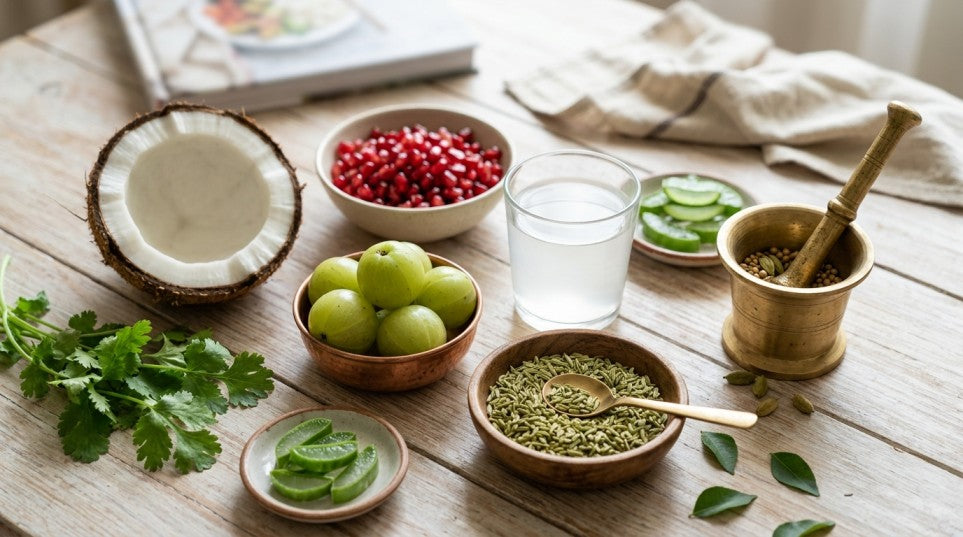
Best choices: Barley (Yava) is the single most recommended grain in Ayurveda for diabetes, it reduces Kapha, improves glucose metabolism, and slows sugar absorption. Ragi (finger millet) and jowar (sorghum) are also excellent. Old rice (rice that has been stored for at least a year) is better tolerated than fresh white rice.
-
Why: These grains have a lower glycaemic index than white rice and bread. They release sugar more slowly, reducing the glucose spikes that damage blood vessels over time. They are also light and easy to digest, keeping Agni strong.
-
Reduce: Fresh white rice in large portions, maida (refined flour) in rotis and bread, white bread, biscuits, and processed breakfast cereals.
Vegetables
-
Best choices: Bitter gourd (karela) is the most important vegetable for diabetes in Ayurveda, it contains compounds that directly improve insulin sensitivity. Fenugreek (methi) leaves and seeds. Drumstick (moringa). Green leafy vegetables: spinach, methi, and drumstick leaves. Bottle gourd, ridge gourd, and ash gourd.
-
Why: Bitter foods are specifically Kapha-reducing in Ayurveda. They stimulate Agni, reduce Ama accumulation, and improve metabolic fire. The insulin-sensitising effects of karela and methi are also documented in modern nutritional research, making this a case where Ayurvedic and evidence-based recommendations align.
-
Limit: Potatoes, sweet potatoes, yam, and beetroot, these are sweet and heavy, increasing Kapha and causing blood sugar to rise faster. They are not forbidden but should be eaten in small portions with other vegetables.
Pulses and Legumes
-
Best choices: Whole moong (green gram), the most Agni-friendly, lightest legume in Ayurveda. Horsegram (kulthi), specifically recommended for Prameha in classical texts. Chana (chickpeas) and masoor dal.
-
Why: Legumes provide protein without causing sharp blood sugar rises. They slow digestion and improve satiety. Horsegram specifically is considered one of the most effective foods for reducing Kapha and improving metabolic function.
-
Avoid: Urad dal (black gram) in excess, heavy and Kapha-increasing. Rajma (kidney beans) in large quantities.
Healthy Fats
-
Best choices: Ghee in moderate amounts, one to two teaspoons per day. This is one of the most important dietary recommendations in Ayurveda for diabetes, and it goes against the conventional 'avoid fat' advice. Ghee improves Agni, lubricates the digestive channels, and improves nutrient absorption. It also has a lower glycaemic impact than the carbohydrates it replaces.
-
Also good: Coconut oil for cooking. Nuts, particularly almonds (soaked overnight and eaten in the morning) and walnuts.
-
Avoid: Refined vegetable oils, vanaspati, and deep-fried foods. These create Ama and impair Agni without providing any benefit to insulin sensitivity.
Spices That Actively Help Diabetes
These are not just flavour additions, they are therapeutic. Use them liberally:
-
Cinnamon (Dalchini): lowers fasting blood sugar and improves insulin sensitivity. Add to warm water, tea, or porridge.
-
Fenugreek seeds (Methi): slow glucose absorption, improve insulin response. Soak one teaspoon overnight and eat on an empty stomach in the morning, or add seeds to cooking.
-
Turmeric (Haldi): reduces inflammation, improves liver function (critical for blood sugar regulation), and directly improves insulin sensitivity through its curcumin content.
-
Ginger (Adrak): stimulates Agni, reduces Ama, and improves glucose metabolism. Use in cooking and as warm ginger water throughout the day.
-
Cumin (Jeera): stimulates digestive fire and reduces Kapha. Use in tadkas, dals, and rice preparations.
-
Bitter melon powder (Karela churna): for patients who find karela too bitter to eat regularly, the dried powder in water is an effective alternative.
Fruits
-
Good choices: Amla (Indian gooseberry), the most important fruit for diabetes in Ayurveda. It improves pancreatic function, is deeply anti-oxidant, and has a very low glycaemic impact. Jamun (black plum) seeds are traditionally powdered and taken with water to reduce blood sugar. Guava, apple, pear, and pomegranate in modest portions.
-
Limit: Bananas, mangoes, grapes, and sapota (chickoo), these are sweet and heavy, causing rapid glucose rises. They are not forbidden but should be eaten only in small portions and not on an empty stomach.
-
Avoid: Fruit juices entirely. Even 100% fruit juice removes the fibre that slows glucose absorption, turning a healthy fruit into an effective blood sugar spike. Eat fruit whole.
The Ayurvedic Diet for Diabetes: What to Avoid
-
Refined sugar and sweets: the most obvious one. Includes jaggery and honey in large amounts, they are healthier than refined sugar but still cause blood sugar rises in diabetic patients.
-
Cold, refrigerated foods: cold food weakens Agni. A diabetic patient who eats cold food regularly is actively suppressing the digestive fire they need to process glucose effectively. Warm your food. Drink warm or room-temperature water.
-
Heavy, fried foods: samosas, pakoras, puris, and deep-fried snacks create Ama directly. They slow digestion, impair Agni, and contribute to the metabolic sluggishness underlying insulin resistance.
-
Excessive dairy: cold milk, ice cream, paneer in excess, and curd at night all increase Kapha and slow metabolism. Warm buttermilk (chaas/takra) is actually beneficial in moderation, it improves Agni without the heavy Kapha impact of cold dairy.
-
Alcohol: directly impairs the liver's glucose-regulating function, disrupts sleep quality (which affects insulin sensitivity), and adds significant empty calories without nutritional value.
-
Processed and packaged foods: contain preservatives, hidden sugars, refined flours, and inflammatory oils that create Ama systematically with every meal.
How to Eat: Timing and Habits That Matter
In Ayurveda, when and how you eat matters as much as what you eat. These simple habits have a significant impact on blood sugar control:
-
Eat your largest meal at midday: This is when Agni (digestive fire) is naturally strongest. A large dinner eaten late at night is processed by a weakened Agni, creates Ama, and raises morning fasting blood sugar.
-
Keep dinner light and early: Eat dinner before 7:30 pm when possible. A light meal, dal, sabzi, one roti, with no rice or minimal rice, keeps the morning glucose level more stable than a heavy late dinner.
-
Do not skip breakfast: Skipping meals causes blood sugar to drop and then spike when the next meal is eaten. Consistent meal timing at roughly the same times each day keeps blood sugar more stable than irregular eating.
-
Sit down to eat without screens or distractions: This activates the parasympathetic nervous system (rest-and-digest mode), which produces better insulin secretion and more efficient glucose uptake than eating while stressed or distracted.
-
Walk for 10–15 minutes after each meal: Post-meal walking is one of the most effective single interventions for blood sugar management, it activates the muscles that are the largest glucose consumers and improves the post-meal glucose spike significantly.
A Sample Day of Eating for Diabetic Patients
| Time | Meal / Practice | Why | What to Avoid |
|---|---|---|---|
| On waking | Warm water with fenugreek seeds (soaked overnight) or cinnamon | Stimulates Agni; primes insulin response for the day | Cold water or sugary tea |
| Breakfast (7–8am) | Ragi porridge or moong dal chilla; almonds (soaked) | Low GI, protein-rich; does not spike glucose | White bread, cornflakes, fruit juice |
| Mid-morning (10–11am) | Small apple or guava; or 1 tsp amla powder in water | Low-GI fruit; amla supports pancreatic function | Biscuits, packaged snacks |
| Lunch (12–1pm) | Barley or jowar roti, moong/masoor dal, 2–3 sabzis with karela or greens, 1 tsp ghee | Largest meal of the day when Agni is strongest | Large portions of white rice; sweet desserts |
| Evening (4–5pm) | Warm buttermilk (chaas) with cumin; or a handful of roasted chana | Supports Agni; prevents evening hunger that leads to poor dinner choices | Tea with biscuits; packaged namkeen |
| Dinner (6:30–7:30pm) | Khichdi (moong+rice), vegetable soup, or light sabzi + 1 roti. No rice ideally. | Light dinner early; Agni is weaker at night | Heavy dal makhni, biryani, late-night eating |
When Diet Is Not Enough: The Role of Panchakarma in Diabetes
Diet is the most important ongoing tool for diabetes management. But for patients who have had diabetes for several years, who have significant Ama accumulation in the body's channels, or whose insulin resistance is deeply established, diet alone produces limited improvement. The channels through which insulin signals travel to the cells are blocked by Ama, and no amount of dietary change can unblock them from the outside. This is where Panchakarma becomes essential.
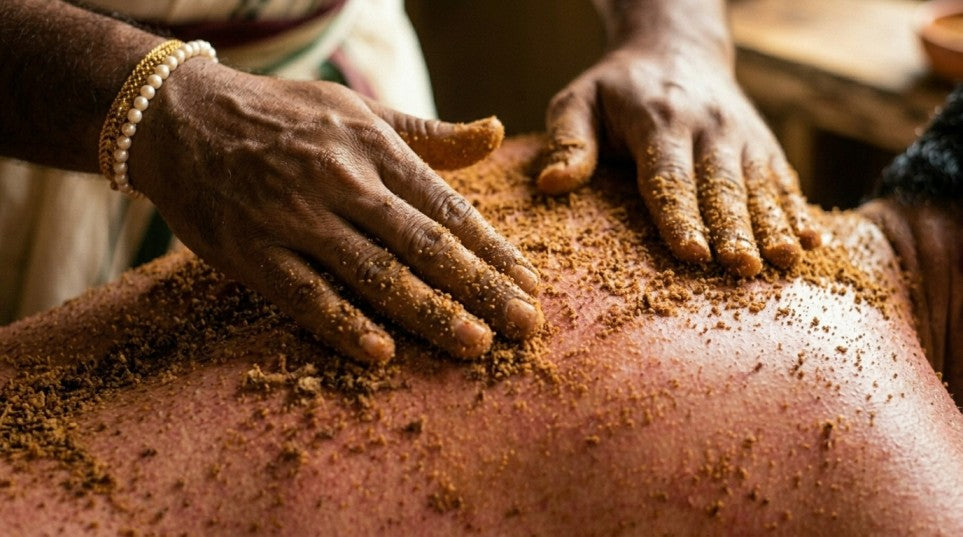
The two most important Panchakarma procedures for diabetes are Virechana (which clears the liver and pancreatic channels that regulate glucose metabolism) and Udvartana (a dry herbal powder massage that reduces Kapha accumulation, improves circulation, and directly improves insulin sensitivity in the fat tissue). Most diabetic patients who complete a Panchakarma course at Yuvrit find that the same dietary changes they were making before produce significantly better blood sugar results after their channels have been cleared.
Also relevant: the connection between PCOS and diabetes, both conditions share the same insulin resistance root and respond to the same Ayurvedic dietary and treatment approach.
Start With the Next Meal
The Ayurvedic approach to diabetes does not require an extreme diet overhaul. It requires consistent, specific changes made meal by meal: more barley, less white rice. More karela and methi. More warm water, less cold dairy. More ghee, less refined oil. Consistent meal timing. Post-meal walks.
These changes, applied consistently over six to eight weeks, produce improvements in blood sugar, energy, and weight that generic calorie-counting often does not, because they are working on the actual root cause: impaired Agni and Kapha accumulation, not just calorie excess.
Frequently Asked Questions
Q. Can the Ayurvedic diet replace diabetes medication?
A. The Ayurvedic diet is a powerful tool for blood sugar management but decisions about medication should always be made with your treating doctor. Many patients who follow a consistent Ayurvedic dietary protocol alongside Panchakarma are able to reduce their medication dose over time, under medical supervision. The goal at Yuvrit is to improve metabolic function to the point where less medication is needed not to encourage anyone to stop medication without clinical guidance.
Q. Is rice completely off the menu for diabetics?
Not entirely. Old rice (stored for more than a year) is better tolerated than fresh polished rice. Small portions of rice eaten with generous ghee, dal, and vegetables so that the glycaemic load of the overall meal is lower are manageable for most Type 2 diabetics. The bigger issue is large portions of fresh white rice eaten as the main component of every meal. Replacing half the rice portion with barley or ragi over a few months makes a measurable difference to blood sugar control.
Q. Is ghee really okay for diabetics?
Yes, in moderation, and this is one of the places where Ayurvedic and conventional advice diverge most clearly. One to two teaspoons of ghee per day improves Agni, lubricates the digestive channels, and has been shown in research to improve insulin sensitivity. The key is that ghee replaces refined oils and processed fats, it is not added on top of an already high-fat diet.
Q. What is the most important single dietary change for blood sugar?
Eliminating sugar-sweetened beverages (soft drinks, packaged fruit juices, sweetened teas and coffees) and switching to warm water, plain buttermilk, or herbal teas. This single change removes a consistent source of rapid glucose spikes without requiring any significant lifestyle reorganisation, and produces a measurable improvement in average blood sugar within two to three weeks.
Related post
27
Apr
24
Apr

24
Apr
